Invisalign and dental veneers are two popular choices for straightening your teeth outside of the traditional path of braces. Millions of people worldwide use both of these treatments, but which one is best for you? Let’s examine Invisalign vs veneers.
What is Invisalign?
To achieve a straight smile, Invisalign can make a big difference! Invisalign is an orthodontic treatment where patients can get removable, custom-made aligners to help straighten their teeth. Compared to the alternative traditional braces route, Invisalign is made of plastic, clear material that is barely noticeable but applies gentle pressure to slowly move the teeth overtime. Invisalign helps to fix crooked teeth, overbites, underbites, crowded teeth, gap issues, or crossbites.
What is the Invisalign treatment process?
A patient begins by getting scans taken of their teeth and a 3D digital model made of their mouth. Using the model, an orthodontist designs custom aligners for patients to wear over the entire process. Over the entire journey, they will get anywhere between 7-30 trays. Each tray is slightly altered from the last, with each new set moving them closer to achieving their perfect smile. Patients usually change their aligners every 2 weeks. Individuals need to wear their Invisalign aligners 22 hours a day to see a difference.
Benefits of Invisalign
Invisalign provides many advantages. It can be worn without being too noticeable, simultaneously boosting confidence and straightening teeth for both young teens and adults. The aligners are comfortable to wear with a precise fit, and they can be taken in and out, which offers individuals the convenience to eat specific foods when they want and to clean their teeth as normal. Additionally, there is also less chance of irritation to your gums and mouth.
Disadvantages of Invisalign
While that all might sound good, there are a couple inconveniences about Invisalign. Patients using Invisalign must be disciplined to wear the aligners 22 hours a day or they will have a reduced effectiveness. Patients also need to brush their teeth every time they eat before putting their aligners back on, to avoid food getting trapped. Additionally, some individuals have Invisalign attachments — little buttons sticking to the teeth to hold the aligners in place — that can become visible if they get stained or discoloured from poor hygiene.
How much does invisalign cost?
Depending on the length of your treatment and how many sets of aligners you need, the price can range between $6,000-$9,000. For more information about the cost breakdown, check out our article here.
What are dental veneers?
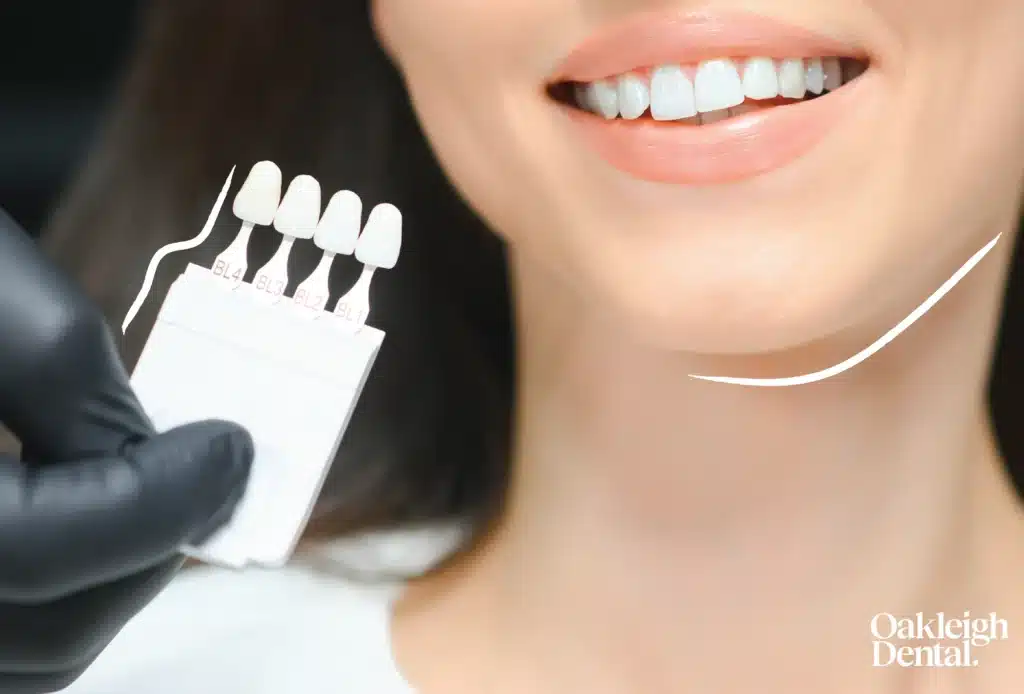
Dental veneers are custom-made shells that are placed on the front of a patient’s natural teeth to improve their appearance. A veneer is designed to resemble the look of a natural tooth, and can be made from two main materials: porcelain and composite resin. Porcelain veneers are more durable, but composite veneers are a bit more affordable and quicker to apply. Veneers are a recommended treatment for patients with teeth that are cracked, broken, overly discoloured and stained, or mildly misaligned.
What is the dental veneers treatment process?
Similar to Invisalign, orthodontists create a 3D mould of your teeth to build veneers. They then share the veneer model with the patients to make sure they are satisfied with the proposed appearance. From there, the shells are carefully created and your dentist thoroughly cleans your teeth before applying them. This ensures all bacteria and plaque is removed to avoid anything getting trapped beneath the veneers and causing decay. Your dentist may need to shave some of your enamel down before bonding the veneer with dental cement.
Benefits of dental veneers
Veneers fix teeth that are discoloured, chipped or cracked, uneven, gapped or worn down. They provide an instant improvement — not requiring weeks or months of orthodontic correction. Other advantages include a natural appearance, resistance to staining, durability, ease of shaping, and the restoration of confidence.
Disadvantages of dental veneers
Unfortunately, while dental veneers look realistic, they are still artificial, only altering the appearance of teeth but not any actual issues like position and alignment. For someone looking for a comprehensive fix to their dental issues, veneers wouldn’t be the ideal choice. Additionally, they are a costly investment and permanent once put on. If a veneer gets chipped, repairing them can become quite expensive as well. Since the veneering process requires the removal of your enamel, your teeth may become more sensitive after getting them put on.
How much do veneers cost?
The cost will vary depending on the number of teeth undergoing treatment and the specific type of veneer applied. For instance, opting for porcelain veneers will incur higher expenses due to the material used, typically averaging between $1,000 to $2,500 per tooth. On the other hand, composite resin veneers typically range from $500 to $1,500 per tooth.
Invisalign or veneers?
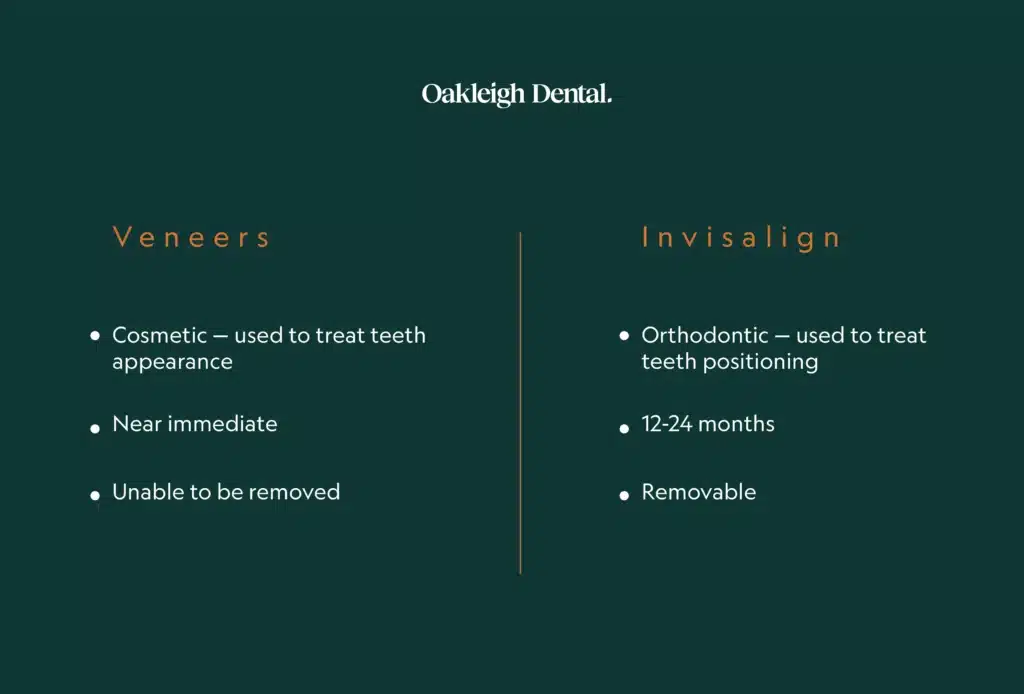
Both Invisalign and veneers provide a significant treatment to improve the appearance of your teeth, though they manage this in different ways. Veneers treat your teeth cosmetically, concealing visual issues with your teeth without addressing their cause. On the other hand, Invisalign is used to actively improve the position and alignment of your teeth, which helps to prevent further decay and issues.
Invisalign also requires you to make adjustments to your daily routine for a longer period of time. Having veneers placed usually takes just a couple of appointments, and while you may need to adjust your diet for a brief time to ensure correct bonding, you can go back to your normal routine relatively quickly. By contrast, it takes a much longer time to complete a course of Invisalign treatment, anywhere from 6 weeks to 18 months.
Despite the longer course, Invisalign is still a removable option, so the adjustments to your routine are more minimal than other orthodontic treatments. Veneers are a permanent application to your teeth and cannot be removed. This is fine for purely cosmetic fixes, but if your teeth have an issue with their positioning, it is better to have that fixed before getting veneers.
Overall, veneers are used primarily to correct your teeth’s aesthetic appearance, while Invisalign is better for treating functionality and positioning, though this may also improve appearance. Invisalign is a more thorough treatment, but for minor improvements, veneers are a reasonable option.
Dental care for all smiles
Overall, whether you choose veneers or Invisalign ultimately depends on your preferences, budget, and smile goals. At Oakleigh Dental, our team of experienced orthodontists is dedicated to helping you achieve your perfect smile. Schedule an appointment with us today to explore your options.