Finishing an orthodontic treatment is a cause for celebration, hopefully with the exciting result of seeing your teeth straight and healthy. Unfortunately, that might not be the end of the entire process. There’s one final, important step that helps keep your teeth in their new position: wearing a retainer.
Why do retainers matter?
While braces and aligners move your teeth into the right position, they don’t automatically guarantee they’ll stay there forever. After treatment, your teeth and gums are still adjusting, and the bone and soft tissue around them need time to stabilise. Without a retainer, your teeth can gradually shift back toward their original positions, a process known as orthodontic relapse.
Wearing a retainer provides that important stabilisation, holding your teeth in place until your mouth has fully adjusted to the new alignment. Wearing the retainer helps to ‘lock in’ the results, ensuring that all the time and effort that went into your orthodontic treatment is worthwhile!
Types of retainers
Retainers come in two main types: fixed and removable. Each offers different benefits and drawbacks, and your dentist or orthodontist will make a tailored recommendation based on your treatment plan and needs.
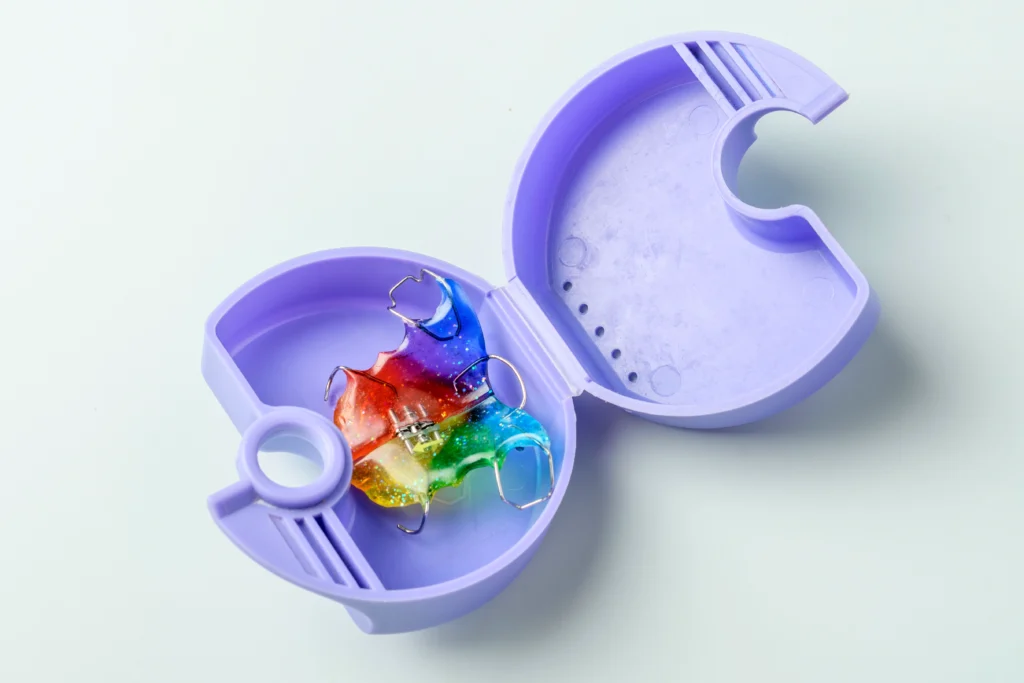
- Removable: Clear or wire retainers that can be taken out for eating or cleaning your teeth. They tend to be more comfortable and easy to use, though they do place a lot of onus on you to remember to wear yours consistently.
- Fixed: This is a thin wire that is permanently attached to the back of your teeth, holding them in place. They are very discreet and take away the chance you’ll forget to wear it, but can make it harder to clean and keep your teeth free from plaque.
Both fixed and removable retainers do an excellent job of keeping your teeth in place. Which one you end up with, will depend on your personal needs, and what will be more effective and comfortable for you.
How long do you need to wear a retainer?
It’s important to wear your retainer consistently to maintain the new position of your teeth, and this does mean it often needs to be worn full-time for the first few months after treatment, including both day and night wear. After that, many patients can scale back to wearing it only at night. This may last for a few years or even indefinitely, but the benefits make it a worthwhile investment.
Your dentist will make it clear how long you need to wear your retainer, and exactly when. It’s important to follow all their instructions, because skipping retainer wear can cause your teeth to shift back to an unhealthy position in months or even weeks.
What happens if you don’t wear one?
Because the tissues and ligaments surrounding your teeth are stretched during orthodontic treatment, they will begin to move back to their original positions without the stability provided by a retainer. This can lead to:
- Crowding of the teeth
- Gaps reopening between teeth
- Bite changes, affecting chewing and speaking
If these issues are allowed to develop, it may force you to need additional orthodontic treatment, which is a significant time and money investment. The most effective way to avoid any of these issues is to follow all the instructions given to you by your dentist.
Looking after your retainer
Part of wearing a retainer is also keeping it clean and safe for use, which ensures it can continue to function properly and preserve your teeth. To keep your retainer clean and working properly, we recommend:
- Rinsing it after every use to remove saliva and debris.
- Gently brushing it with a soft toothbrush and mild soap or retainer cleaner.
- Always storing it in its case when not in use.
- Keeping it away from hot water, direct sunlight or other heat sources, which can warp a removable retainer’s shape.
- Scheduling regular check-ups to assess your retainer.
Our team is always here to help if you have any questions or concerns about your retainer, and we’ll help you keep it in excellent condition.
Maintaining a straight smile
Orthodontic treatment is an investment in your oral health and smile satisfaction, and wearing a retainer represents a significant part of that process. If you’re interested in exploring orthodontics, have retainer questions, or just need someone to help you navigate your oral health, get in touch with our friendly team or book an appointment to start! We’re always happy to help you smile.