Invisalign is an increasingly common orthodontic treatment option for those looking to improve the position and look of their teeth. Made of clear, flexible plastic and entirely removable, these aligner trays are popular for those who need teeth straightening but want discreet treatment. But do these trays actually work?
Does it work?
We won’t keep you on the hook for too long — yes, Invisalign does work, and in most cases incredibly well! Like other orthodontic appliances (including braces), Invisalign is designed to straighten your teeth when they are misaligned (malocclusion). The aligners also fix overbites, underbites, crossbites, and gapped or crowded teeth.
How does Invisalign work?
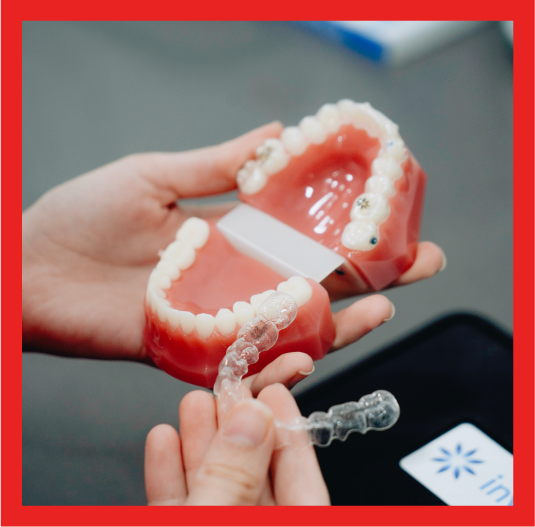
Invisalign works by using a set of plastic trays that are moulded to your teeth using 3D images. These images help the orthodontist plan a series of trays that will slightly alter in size and shape. This ensures they continue to exert gentle pressure on your teeth, guiding them into the correct position.
As your teeth move, each aligner tray will progressively lose its effectiveness because it stops exerting pressure. Swapping trays out every few weeks ensures that your teeth will be under that pressure again and prompted to move. For the most effective treatment, patients should be wearing their aligners for 22 hours a day, only removing them to eat, drink and clean their teeth. The full treatment process to straighten your teeth typically takes between 6 to 12 months.
Invisalign vs braces — is Invisalign better than braces?
Whether you should get Invisalign or braces really comes down to the severity of the issue you’re trying to treat. Braces are able to achieve more significant results given they are fixed and capable of exerting more force. However, this doesn’t necessarily make them the best option in all cases.
Braces are very useful in complex and severe cases of malocclusion. In less severe cases, clear aligners are preferable because they are often quicker, more affordable and require fewer consultations. Read our article on Invisalign vs Braces if you’d like to learn more about the differences.
Invisalign for overbite
Invisalign can effectively treat mild to moderate overbites, when the upper teeth stick out too far beyond the lower teeth. Very significant overbites are still often better treated by braces as elastics or rubber bands can be more easily employed. Your dentist can help you identify which treatment would be more effective. The same is also true of underbites and crossbites.
Invisalign for crooked teeth
Invisalign is able to move the position of crooked teeth so they sit more naturally in the mouth. Traditional braces are hard to effectively place on severely crooked teeth, leaving the aligners as the most effective treatment course.
Invisalign for gapped teeth
When you have space between two or more teeth, Invisalign exerts pressure that pushes them into a more natural position. By the same token, you can also effectively use it for crowded teeth.
Benefits of Invisalign
Invisalign often the most preferable option for a lot of people. Some of the main benefits include:
- Able to be used by adults and teens. All people can use aligner trays to improve the position of their teeth if they are not too severely misaligned. We recommend children under the age of 7 do not get aligners, as their jaw is not fully developed yet.
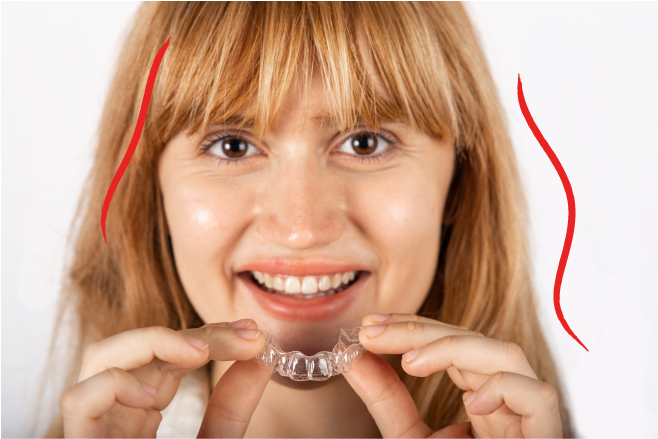
- Discreet and clear orthodontics. Aligners are fully clear, making them far less noticeable on your teeth than braces and other orthodontic appliances. As a result, patients often feel more comfortable receiving Invisalign, particularly adults who are undergoing orthodontic treatment later in life.
- Easy brushing. Cleaning your teeth is easier when using clear aligners because the trays can be taken out completely. This specifically is a big drawcard over getting braces. The permanence of braces forces patients to learn new cleaning methods.
Things to consider
While there are many Invisalign benefits, there are still a number of important considerations for people to know before deciding to start treatment.
- Requires more self-control: Invisalign trays need to be worn for at least 22 hours a day to be fully effective, and only removed for eating, drinking and teeth cleaning. This can take a lot of effort for a patient to remember and get used to, but it ensures the best results. Some patients are tempted to take them off more frequently, but that reduces their effectiveness and will only prolong your treatment course.
- More brushing and cleaning: Every single time you take your aligners out to eat or drink, both your teeth and the trays themselves need to be cleaned before they are put back in. This prevents plaque from building up and being held in your teeth, and cleaning Invisalign trays stops bacteria from staying on your trays and then infecting parts of your mouth.
- Unsuitable for some issues: As we’ve said, Invisalign is better suited to treating mild and moderate oral issues, and may not be effective for more severe situations. Before getting set on Invisalign, have a consultation with a dentist or orthodontist who can identify whether it would be effective for you.
The clearer way to a happier smile!
Invisalign is one of the most popular and effective orthodontic treatments available, and when you come to Oakleigh Dental you are in the hands of a Platinum Invisalign provider! Have a chat and a consultation with our expert team to identify if Invisalign would be able to fix any problems you have with your teeth, and how we can help you smile.