If you’re living with damaged or missing teeth, dental implants, also known as teeth implants, offer a lasting solution for many years. With proper care, they can help your smile achieve its full potential. Beyond just aesthetics, they can also improve a variety of oral health issues. Let’s explore what they are, how the implantation process works, and why they might be the right choice for you.
What are dental implants?
Imagine losing a tooth. It could be due to a disease or an impact from a sports event. Over time, this can result in bone loss, difficulty speaking clearly, and changes in your bite that make eating uncomfortable. The solution to this? Dental implants.
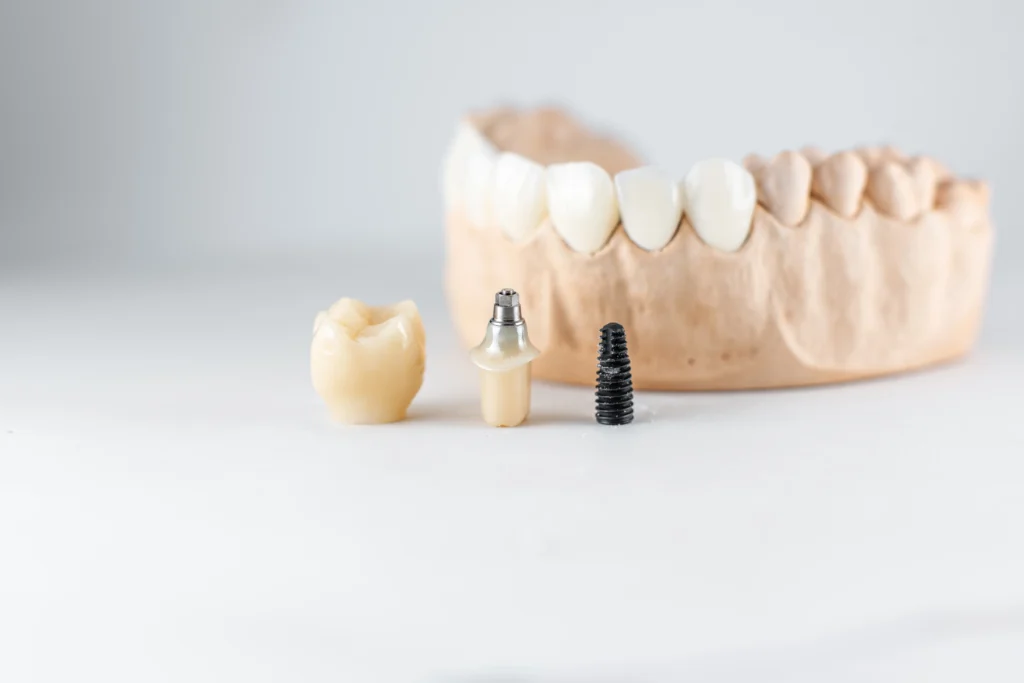
Dental implants are custom-made to replace a lost tooth. They are made of three components: a titanium screw that is surgically placed in your jawbone, an artificial tooth or crown, and an abutment to join the two. Dental implants are long-term — while the crown piece may require a replacement, the titanium implant does not decay over time and will last the rest of your life.
Why might I need a dental implant?
There are a variety of reasons why someone may need a dental implant. The main reason is a missing tooth or multiple missing teeth. However, patients may also consider implants if they have trouble speaking or eating, or are unable to wear dentures.
To be ready for a teeth implant procedure, you must:
- Be willing to commit to getting the procedure done
- Be willing to take time for it to heal
- Have a full-grown jawbone
- Have enough bone to secure teeth implants
- Have healthy mouth tissues and no underlying oral health issues
- No underlying mouth health issues
- Avoid smoking
If you aren’t sure about dental implants, you can wear dentures or get a dental bridge as alternatives, but either way it’s recommended that you talk to your dentist about the potential benefits and risks of each option as well as what’s best for you.
What is the dental implant procedure?
After speaking with your dental provider and confirming a dental implant works well for your circumstances, you’ll then have your first appointment. This includes a review of your medical history, and scans and x-rays to see a clear picture of where to place the implant.
The implant surgery will then be completed under anaesthetic, with the implant placed into your jawbone. Once it’s in, it’s important to manage it as the bone heals around it. Later on, dentists will create your artificial tooth replacement — like a crown or dental bridge — and attach it to the dental implant to fill the gap in your teeth.
Dental implant aftercare
After the entire dental implants procedure is finished, you may experience swelling in your face or gums as well as bruising. It’s crucial you follow the oral hygiene instructions given to you by your dentist and regularly clean around the implant. Make sure to only consume soft foods. Patients will also need to maintain their regular oral health routine, including brushing and flossing, and try to avoid damaging habits like teeth grinding and smoking. If you feel the implant or artificial tooth loosening up or causing shooting pains, it’s important to schedule an appointment with your dentist.
What do dental implants look like?
What’s great about dental implants is they blend right into your teeth, with only the base looking quite different. Below is an example of how it looks in your mouth.
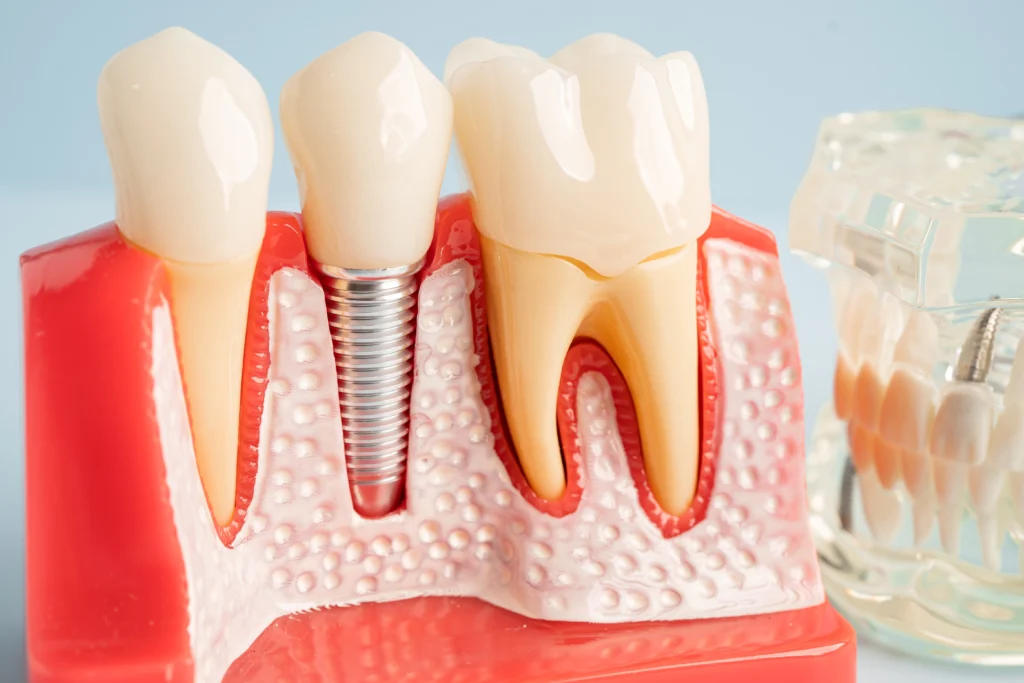
Replacing teeth or holes with implants is not scary. Artificial teeth will make it easier for you to eat and live your everyday life rather than chipped, broken or missing teeth.
Benefits and risks of a replacement tooth
Getting a dental implant is a big decision — personally and financially. Below are some of the benefits and potential risks associated with the procedure.
Some of the benefits include:
- Helps you chew easier and eat normally
- Restores cosmetic appearance and improves confidence
- Helps to keep the jawbone from losing bone and shrinking
- Helps other teeth around the implant stable with no gap
It is important to note that getting an implant can carry some risks, including damage to nerves or sinus problems, though these can easily be treated if they occur. The most common issue to look out for is infection, which can lead to a loss of the implant if not treated. If you have pain that lingers a few weeks after the surgery, speak to your dentist for help.
How much do dental implants cost?
Your dental implants cost will depend on how many you need, and how complex the surgery will be, depending on where the implants will be placed. Our team will give you a detailed breakdown of the potential costs of your treatment to help you make the best decision. While implants are expensive, they are incredibly durable and lasting, often being a better long-term financial decision than other treatments.
Does Medicare cover dental implants?
Medicare typically does not subsidise costs for implant treatment, unless they are considered clinically necessary, in which case you may be able to receive a contribution. Our team will happily help you understand what you may be eligible for.
Are dental implants worth it?
At the end of the day, most dental implant procedures are very successful. As long as you keep your teeth and gums clean, see your dentist regularly and avoid damaging habits such as chewing hard things and smoking, you’ll be all good to go towards keeping your teeth happy and healthy after a procedure.
Are you considering teeth implants? At Oakleigh Dental, our experienced team of dentists provides high-quality dental implant procedures. We offer affordable options, a comfortable environment, and personalised care.
Contact us today to schedule a free consultation and learn more about how dental implant treatments can transform your smile.