Pulling a tooth out isn’t anyone’s idea of fun, although sometimes it’s the best option for your health. But once the tooth is out, does it really need a replacement?
When is it necessary to replace an extracted tooth?
Removing a tooth can be an important way to preserve your overall oral health in some circumstances. However, it is worth pointing out that dentists will usually try to save a damaged tooth before extracting it. This could be through dental fillings, crowns, or root canal therapy.
Unfortunately, when teeth have a significant enough issue, extraction is the only way to avoid things getting worse. You may need to consider a tooth extraction if you have severe tooth decay or infection, or periodontitis, the advanced form of gum disease. Removing the tooth can prevent these issues from spreading.
Extractions are also an effective way to treat teeth that are broken, fractured or deeply injured. Dentists may also recommend extracting teeth if you suffer from overcrowding, which is when there is not enough space in the mouth to fit all of the teeth. This is especially common before beginning orthodontic treatments.
Do teeth always need to be replaced?
In most cases, it is really important to fill the gap left by an extracted tooth with a suitable replacement. This is especially true when we remove teeth due to disease, infection or injury, because they wouldn’t have come out if they remained healthy. Replacing these teeth helps your other teeth to stay in their correct positions and keeps your gums and jaws healthy.
There are some cases where you may NOT need to replace an extracted tooth, including:
- Wisdom teeth: The ‘third molars’ typically emerge later in adulthood, but are notorious for erupting incorrectly, known as impaction. We recommend removing these teeth, but because they don’t play a role in chewing or alignment, they do not need a replacement.
- Orthodontic removal: If you are preparing for orthodontics like braces or aligners, we may recommend removing a healthy tooth to help make more space in your mouth. This helps your remaining teeth to gradually shift into position and fill the gap.
- Some back molars: In some cases, back molars that we remove for health reasons may not need a replacement, if they have little to no impact on chewing.
Options for replacement
While extracting a tooth is rarely our first option for treatment, you can rest assured that when it becomes necessary, there are safe replacement options.
Implants
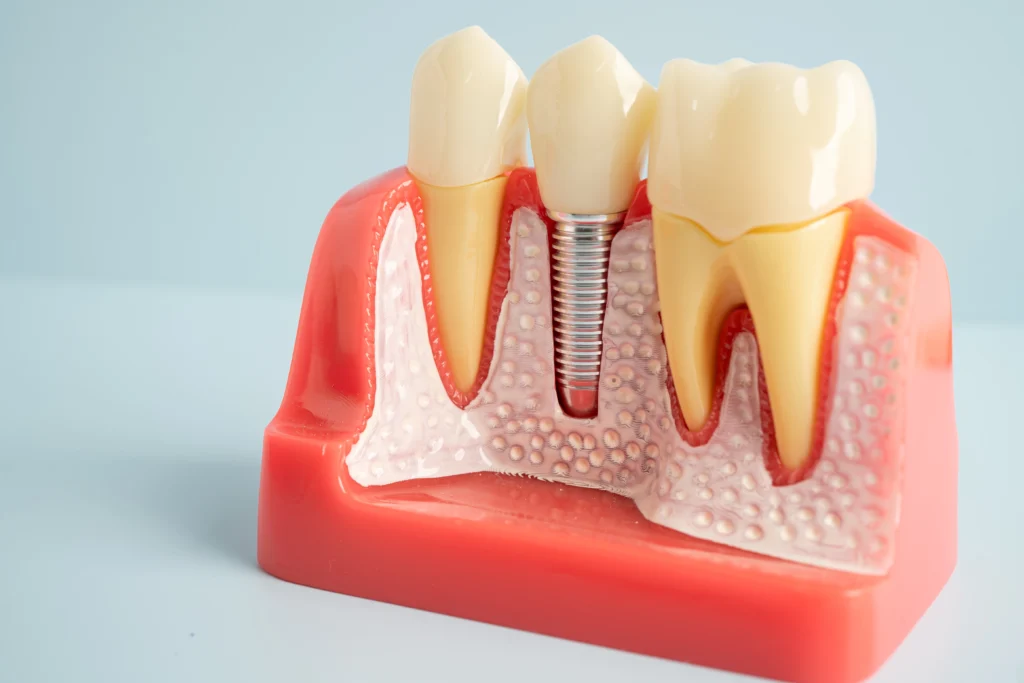
Dental implants are the most common replacement option for an extracted tooth, including a titanium implant screw that we place in the jawbone, a connecting piece that attaches to it, and a dental crown to complete the restoration. Dental implants are long-lasting, and the placement in the jaw actually helps to preserve the jaw bone! When teeth are missing, the bone around that area can begin to deteriorate, but placing an implant helps to preserve its health and function.
Bridges
A dental bridge is a common alternative to an implant. Instead of placing a post in the jawbone, bridges use the neighbouring teeth to the gap as anchors, fitting a false tooth in between. They are typically faster to place than implants, and a great option if you have multiple consecutive missing teeth. However, they lack the longevity of an implant, and can lead to higher rates of decay and disease.
Dentures
Dentures are usually reserved for cases where you have multiple missing teeth in your upper or lower jaw. We typically use partial dentures in these cases, which is when there are only some replacement teeth, instead of replacing an entire arch of teeth as with full dentures. The partial denture clips onto the remaining teeth with prosthetics that fill the gaps. Dentures are a great option that doesn’t require surgery, but they are less stable than the other fixed options.
What happens if I don’t replace the tooth?
If you have a tooth extracted that doesn’t get replaced, it can cause a lot of issues in your mouth. Most notably, neighbouring teeth will begin to tilt into the gap created by the missing tooth. If they tilt too much, they can begin to trap food and increase the risk of decay and infection, while also adding discomfort. Tilting also makes it harder to replace the missing tooth later, and you may need to go through orthodontic treatment first.
Leaving the gap empty can also lead to a loss of gum and bone support in the area, due to the missing tooth root. Replacing the extracted tooth helps to reduce this risk, while also avoiding bite problems and jaw strains, preserving facial structure, and supporting proper speech.
When should I replace the tooth?
It’s important to replace the tooth as soon as you can after it has been extracted, but we often advise letting the extraction site heal first, which may take a few months. The waiting helps to prepare the site for a replacement, especially if there was infection or bone loss. Once the site has healed, we will walk you through all of the replacement options, and help you make the best pick to support your oral health.
Fill your smile!
Tooth extractions aren’t something you look forward to, but when you need one, you can rely on our supportive team at Oakleigh Dental. Book an appointment or get in touch with us to learn more about how we can help you preserve your smile — we’ll see you soon!