Has your tooth cracked or started to decay? Whether it’s from biting into something too hard, grinding your teeth, or simply years of wear and tear, a cracked or decayed tooth is more common than you might think. While it can start off as a minor issue, leaving it untreated may lead to pain, infection, or even tooth loss. However, getting a dental filling can be a great way to protect your oral health. But does getting a filling hurt?
What is a dental filling?
If you’ve never had a filling before, it’s normal to feel a bit nervous, especially when it comes to pain. The good news is that dental fillings are a low-discomfort procedure, where a special material is used to swiftly restore the damaged areas of your tooth.
Rather than letting your tooth decay and fall out, dental fillings seal up the damage and maintain tooth structure and health. They are used for three main reasons: fix cavities, repair cracks and damages from traumatic events, or address structural issues in the tooth. For more information, you can check out our detailed explainer.
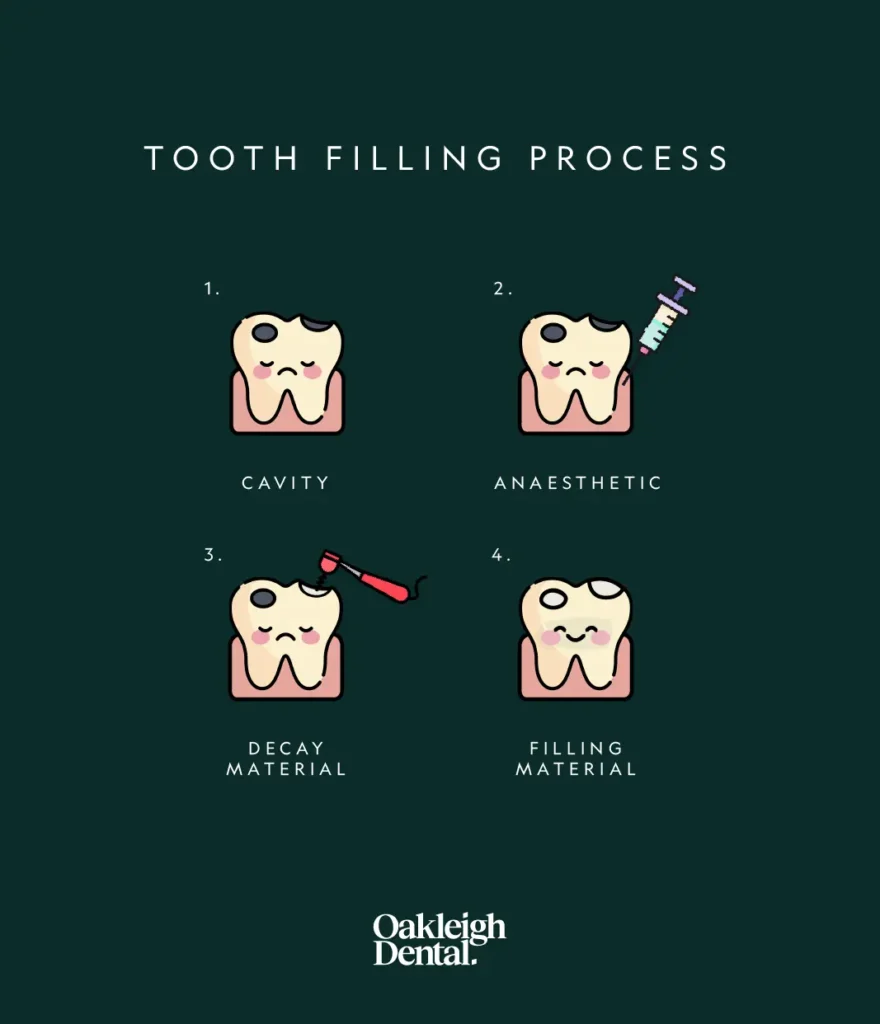
What happens when you get a filling?
Getting a dental filling is a straightforward procedure that typically takes about 30-60 minutes and can be done while the patient is awake. The process involves four key steps:
- Examination – The dentist may notice a cavity or crack during an exam, or the patient may report pain or sensitivity, prompting further evaluation. A filling appointment is scheduled and the filling material options are discussed.
- Preparation – On the day of the filling, the dentist will begin the procedure by numbing the tooth and surrounding gums with local anesthesia. They will use a dental drill to remove the tooth’s plaque and decay from the inside. If the damage has reached the dentin layer (the more sensitive part of the tooth), the procedure may be slightly more painful, but you won’t feel it due to the numbing anesthesia.
- Filling – The dentist will use the appropriate filling material and a specialised tool to then fill the cavity or crack.
- Hardening and Polishing – A light is used to harden the filling, if it’s a resin composite material. Once the tooth is finished, the dentist polishes it to restore its smooth surface. The patient can then confirm it feels good and go home.
Do fillings hurt?
While a dentist uses a drill to remove decay, the procedure is far less painful than letting the problem worsen. When a tooth becomes soft due to disease, it will eventually fall out. Losing a tooth and needing a replacement is often more painful and costly than simply filling a small cavity in the affected tooth. So if you’re eating too much sugar and getting cavities or you accidentally fell and cracked your tooth, get it fixed fast before the issue worsens.
Types of tooth fillings
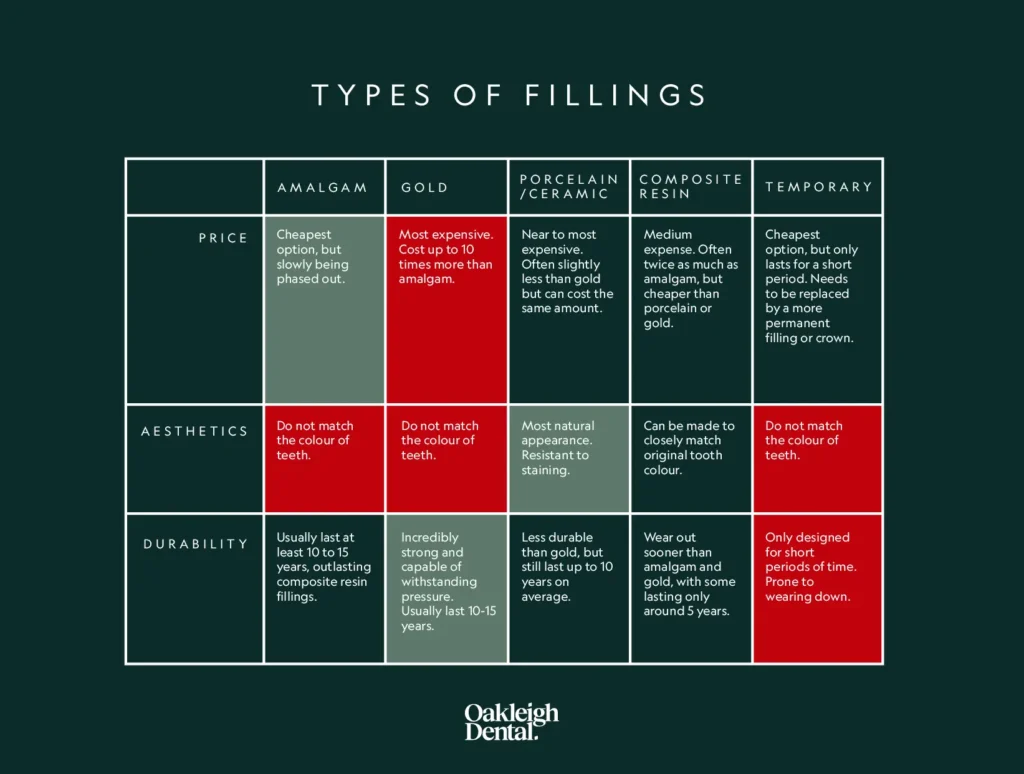
Now, there are many ways your tooth can be filled. Let’s look at the top ones:
- Composite resin
A white-yellow, tooth-coloured material that blends in with the natural shade of your teeth. It’s a popular choice for visible areas like front teeth. - Amalgam
A durable metal mixture (including silver, copper, tin, mercury, and zinc) that’s safe and long-lasting. It’s commonly used for back teeth where strength is important but rarely used in first world nations. - Porcelain and gold tooth fillings
They are also custom-made in a lab. Gold is extremely durable and long-lasting, while porcelain provides a natural appearance. Both are more expensive than other options but can last many years. - Glass-ionomer cement
A tooth-coloured material that releases fluoride to help protect the tooth from further decay. It’s often used for baby teeth or non-load bearing areas.
It’s important to talk through the options, prices, and time-constraints to make sure you pick the right filling for your teeth.
How a dental filling can help
Fillings treat existing decay and help prevent further damage. Some of the benefits you may experience might be:
- Strengthen weakened teeth
- Preserve your natural tooth structure
- Restore chewing function
- Improve the appearance of your teeth
- Last for 5 to 20 years, depending on care and material
What should I expect after a dental filling?
After your appointment, your teeth might be more sensitive when you eat something hot or cold, consume sugary foods, or bite and chew food. You may also sense mild soreness in the gums near the treated tooth. This is usually temporary. However, if the sensitivity lasts more than a few days, contact your fillings dentist. For more help, find out the best things to eat here.
Figure out if you need a filling today
If you’re feeling like a tooth is slowly decaying, don’t wait for it to get worse. It’s best to contact your local dentist and work with them to get a pain-free dental filling. Here at Oakleigh Dental, we prioritise our patients comfort and health. We have a wide range of dental practitioners who can help guide you through the dental filling process — get started today!
Contact us to learn more.