Everyone has enamel on their teeth — this hard outer layer protects the tooth surface and the more sensitive internal areas such as the dentin and the pulp. But if too much bacteria builds up, it tends to wear down and cause sensitivity and ultimately, tooth decay. To combat this, our body naturally tries to fix this through teeth remineralisation.
What is tooth demineralisation vs remineralisation?
Tooth demineralisation and remineralisation are both natural processes.
Demineralisation occurs when minerals are lost from the tooth structure, primarily due to acids. This process can be exacerbated by the consumption of excessive sugary and starchy foods, which leave sugars in the mouth. These sugars promote the growth of bacteria, leading to plaque formation, which in turn produces acids. As a result, the enamel begins to break down because there is too much acid in the mouth.
When your body detects this loss, it naturally undergoes remineralisation to help restore the lost minerals (calcium and phosphate) to the enamel. This restoration occurs through saliva production and the consumption of certain foods. As remineralisation continues, it helps to strengthen teeth and make them healthier again.
However, if demineralisation occurs more often than remineralisation of teeth, it can lead to an excess loss of minerals, which ultimately leads to cavities. Those are no fun to deal with.

What causes tooth demineralisation?
There are a couple of reasons why minerals are lost from teeth, which make tooth remineralisation and enamel strengthening necessary.
Bacteria build up and mouth acid
If you consume too many sugary drinks and food items and don’t prioritise your dental health, remaining sugars will build up in your mouth. Excess sugar creates a breeding ground for bacteria, forming a white sticky substance known as plaque. As plaque clings to your teeth, it digests any new sugars that come, producing acids as a byproduct. These acids then attack the enamel, leading to mineral loss and tooth decay.
Not enough saliva
Saliva is a natural watery fluid produced by the salivary glands. It helps with digestion, moistens food, improves taste, and aids in remineralisation. But if you’re experiencing dry mouth and lacking a healthy level of saliva, less fluid is available to neutralise acid and clean teeth. This then leads to mineral loss and tooth decay as well.
How to strengthen teeth
Now that you know bacteria, mouth acid, and a lack of saliva cause demineralised teeth, there are many ways you can combat it and strengthen tooth enamel.
Cleaning
First, bacteria builds up when you don’t clean your teeth, so if you consistently brush twice a day for 2 minutes each time, and floss at least once a day, there is a better chance you can keep bacteria at a minimum.
If you’re brushing frequently but still seeing plaque build-up, it may be because you are consuming too much sugar. Fruit juices, fizzy drinks, coffee and junk food can all lead to excess bacteria and plaque in the mouth. If you replace those items with whole grains, veggies, and lean proteins, you’re bound to notice a difference.
Fluoride
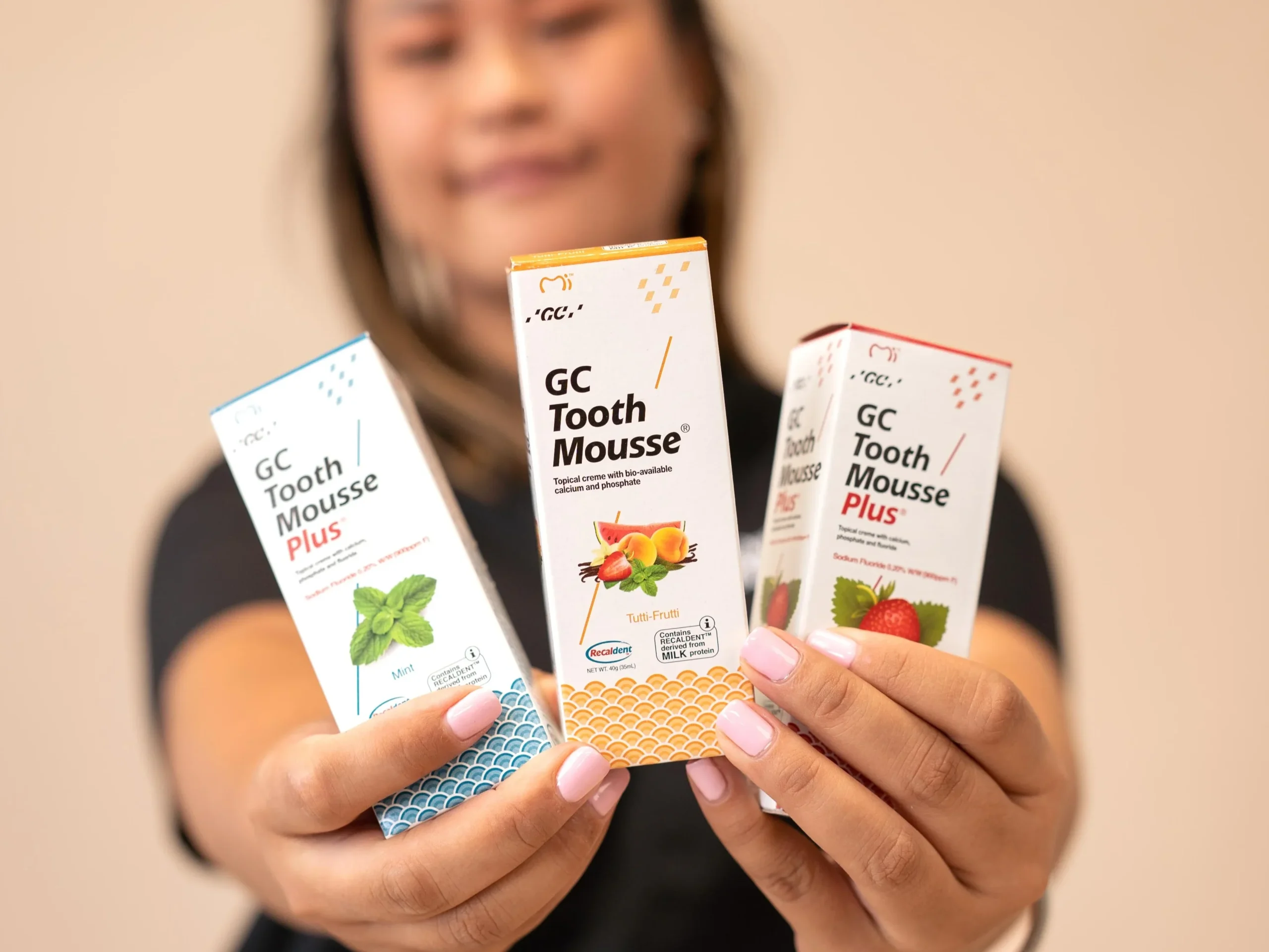
You can also strengthen your teeth by implementing more fluoride products into your routine. Fluoride is a naturally occurring mineral that provides ongoing protection to aid in cavity prevention. So, for example, picking up remineralising toothpaste, tooth mousse or fluoride mouthwash from your local chemist can help to neutralise bacteria, repair damaged enamel, and polish off surface stains. You can also go through whitening fluoride treatments. Some common methods include applying foam in a custom tray placed over your teeth, painting fluoride directly onto your teeth, or using a fluoride gel.

Xylitol
One other option is including Xylitol in your diet. Xylitol is a natural sugar found in plants and can often be used as a substitute. It works well because it starves bacteria, disrupts growth, and increases saliva flow. That’s why sugar-free chewing gum is good for you! It helps to wash away harmful plaque bacteria because it’s the real sugar that promotes bacterial growth, not the sugar-free products.
Hydration
Drinking plenty of water and staying hydrated is essential for oral health, as it helps wash away bacteria and food particles that can lead to plaque buildup. Keeping your mouth moist is important because it prevents dry mouth, which can contribute to tooth decay and gum disease.
If you’re following all these steps, you’ll be able to strengthen and remineralise your teeth naturally. Once you start to notice less tooth sensitivity, smaller white spots, and healthier-looking teeth, you’ll know you’re on the right path. It is a slow process, but over three to four months of sticking to good habits, you will start to see a real difference in your smile.
Take care of your teeth
We recommend visiting the dentist for a cleaning every six months. This is an excellent way to make sure you are taking proper care of your teeth. If you’re concerned about enamel erosion, book an appointment with us to learn more about how to remineralise teeth, prevent further damage, and keep your smile healthy. Our team of experts at Oakleigh Dental prioritises your oral health and helps ensure your teeth remain free from decay.
Visit us to take a step towards better dental health! Contact us here.