Strong, healthy baby teeth matter — they play just as vital a role in early childhood as permanent teeth do later in life, so it’s essential to take good care of them. Good oral health at the start of childhood will set the stage for a healthy smile in a child’s future.
Curious to learn more about the impact of baby teeth and how to care for them? Keep reading to find out.
When do baby teeth come in?
Many wonder: how many baby teeth does a baby have? Babies are usually born with 20 baby teeth — also known as deciduous teeth — under their gums, consisting of:
- 4 second molars
- 4 first molars
- 4 canines
- 4 lateral incisors
- 4 central incisors
When a child turns about 6 months old, their first few teeth start to grow in. This process is known as “teething”. A child may experience extra drooling, tender gums, excessive chewing, fussiness, disrupted sleep or pain during this time. Thankfully, it’s temporary and there are gentle ways to ease it, such as giving them a chilled teething ring, gently massaging their gums, or using teething gels or pain relievers if a doctor recommends.
By the time a child turns one, a few baby teeth have usually made their appearance. Most children will have a full set of baby teeth by the age of three. These teeth have narrower roots, which leave space for adult teeth to develop underneath. Around age six, the adult teeth begin to emerge, gradually replacing the baby teeth.
When should a child go to the dentist for the first time?
Baby teeth tend to be whiter than adult teeth. This is due to the thinner enamel on them, which makes them more sensitive. A lack of enamel makes baby teeth prone to tooth decay, so it’s even more important that parents take care of their child’s teeth from the very beginning.
It’s recommended that children have their first dental appointment preferably within 6 months of their first tooth appearing, such as around their 1st birthday. In a child’s first appointment, the dentist or oral health therapist will teach proper brushing techniques and examine any negative habits the child has developed, such as sucking their thumb. If multiple teeth have come in, the dentist will check them for any tooth decay.
For more information on what your child’s first dental appointment should look like, check out our explainer.
Why is it essential to take care of oral health at a young age?
Since baby teeth ultimately fall out, some parents assume oral health isn’t as important in early childhood. But that’s not the case; taking care of your child’s teeth has a massive impact on their physical, emotional, and social development. Teaching your children to look after them also instills good lifelong habits of daily tooth brushing and cleaning- just as bathing or showering does.
Healthy baby teeth support proper chewing, which promotes good nutrition. They also help with speech development and clear communication. Additionally, healthy baby teeth improve a child’s ability to focus, learn, and perform well in school or sport environments, without the distraction of dental pain. When teeth are healthy and bright, they boost overall self-esteem and confidence in a child, which can have a lasting impact. Healthy baby teeth can prevent infections, cavities, and discomfort, while also protecting the permanent teeth developing underneath.
Why are baby teeth important?
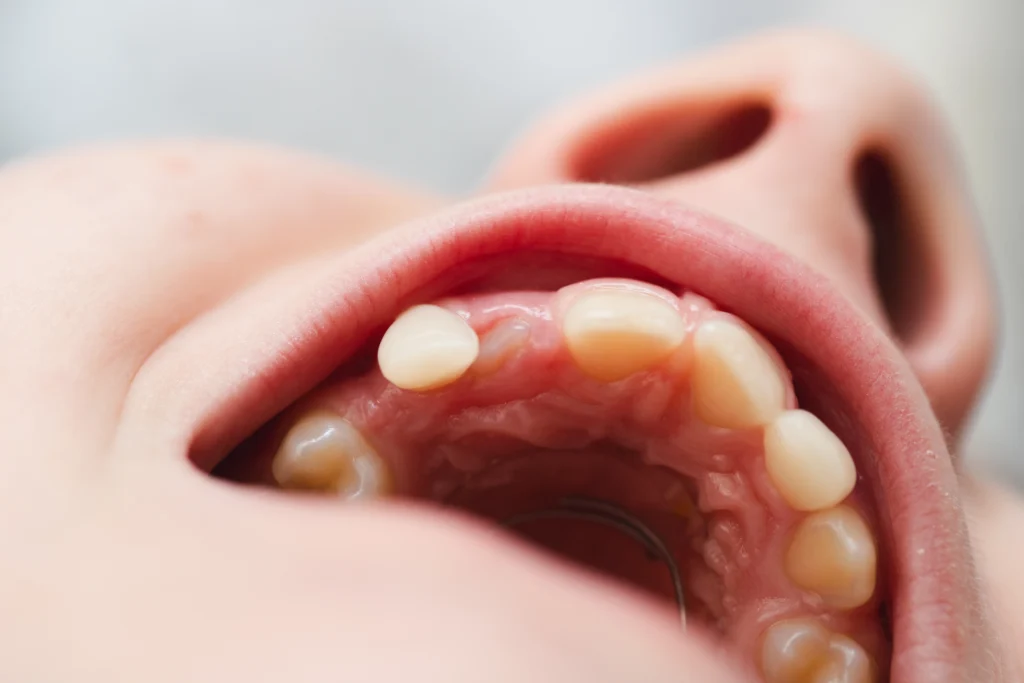
Baby teeth are critical to the development of jawbones, muscles, and permanent teeth. In most scenarios, a baby tooth stays in a child’s mouth until the permanent tooth is ready to emerge. Once it does, the roots of the baby tooth break down and disintegrate, which causes it to loosen and fall out. Once the baby tooth is gone, the permanent tooth has the space to grow in properly. Maintaining healthy baby teeth lays the foundation for strong, well-aligned adult teeth, making early oral care essential.
What happens if baby teeth are lost too early?
What happens if a child falls over, hits their face, and gets a tooth knocked out? Early tooth loss can cause spatial problems for permanent teeth, with surrounding teeth able to crowd or tip into the open space.
To avoid this, a dentist can insert a space maintainer to fill the place of the missing baby tooth until the permanent tooth grows in. Space maintainers are small, custom-made appliances, made of metal or acrylic that surround the neighbouring teeth to preserve the space between. These maintainers can be cemented in the child’s mouth or be removable, just like a normal retainer.
- Removable: Pop in and out and may have a synthetic tooth attached to hold the space open.
- Fixed: Dental glued into place against the other teeth. They come in multiple forms: crown and loop, unilateral, lingual, and distal shoe but generally look like little open rings which allows the permanent tooth to erupt into it.
These maintainers are helpful because if surrounding teeth shift out of alignment, they become more difficult to clean and may require further intervention, leading to potential dental issues down the road like the need for braces or Invisalign. However, this is a case-by-case situation, as not all children need a maintainer. It’s important to consult with a dentist first to learn more about what’s best for you and your child.
How to care for baby teeth
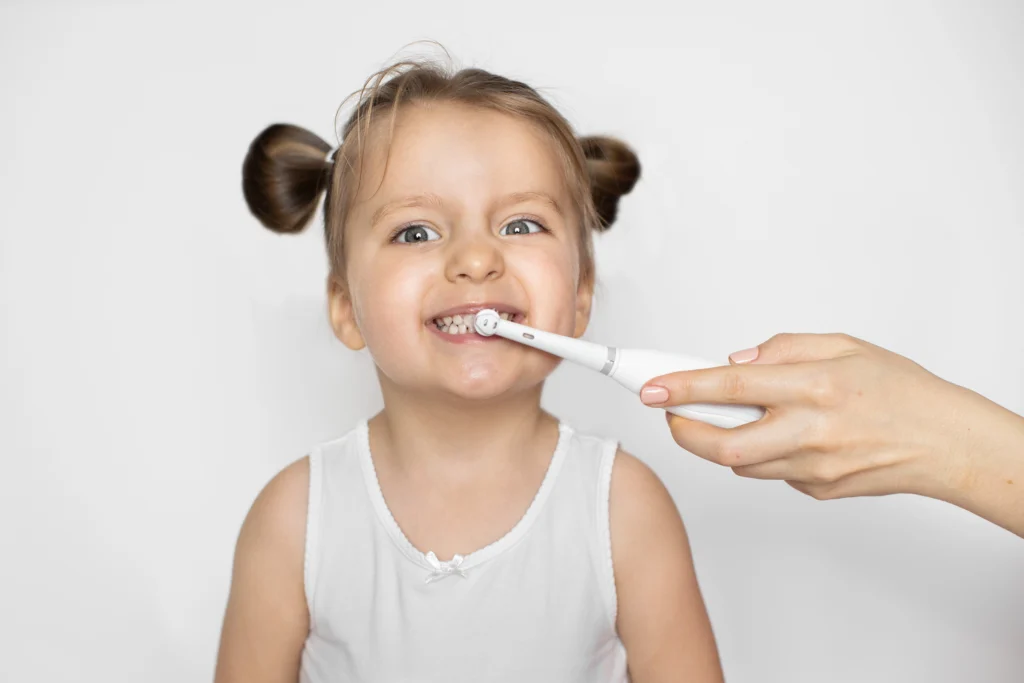
As soon as baby teeth start to show, they have the chance to decay. As parents, it’s important to use a soft toothbrush and a little water to gently clean their small teeth. Once a child is over a year old, they can start to use a low-fluoride toothpaste to brush. Make sure you teach them not to swallow and to rinse and spit their toothpaste out afterwards.
To keep their teeth healthy, be aware of their sugar intake, from desserts to flavoured yoghurts. Too much sugar can wear down the enamel and create tooth decay.
Take your child to the dentist today
Here at Oakleigh Dental, we’re dedicated to ensuring smiles stay strong from the start. No matter the age, from 6 months to 99 years, we’re here to help your family achieve their dream smiles.
Our expert team can guide your loved ones every step of the way. Book an appointment today, and we’ll help you keep smiling.