Interested in dental implants, but not sure what the recovery and aftercare period is like? While dental implants are generally less invasive than tooth extractions, they still require adequate time for rest and recovery. But don’t worry — dental implant recovery is a manageable process, especially with help from your dental team.
What are dental implants?
If you have a decayed or missing tooth, dental implants are an excellent option for restoration. A dental implant is a titanium screw that is inserted into your jawbone in place of a missing tooth root. This screw is finished with an attached crown or prosthetic to create a replacement tooth. Dentists can make these new teeth match the size and colour of the missing tooth, to align perfectly with your existing teeth.
What happens during a dental implant procedure?
During a dental implant procedure, there will be an initial consultation with your dentist to discuss previous dental history, take x-rays, and identify if the dental implant procedure is the best for you. If it is, the dentist will move onto the impression phase. This is where they will take dental moulds of your mouth so they can create a surgical guide to fit right into your missing spot.
In the next appointment, if there is any tooth in the way of the implant, the dentist will extract it to make space for it. They will also take a look at the bone in your jaw to make sure there is enough to adequately hold the titanium implant. After that, another appointment will be booked for the dental implant to take place. In this surgical procedure, patients are sedated, anaesthetised and the dental screws are inserted into the jaw. Once this is complete, patients need time to heal before the new artificial tooth can be applied.
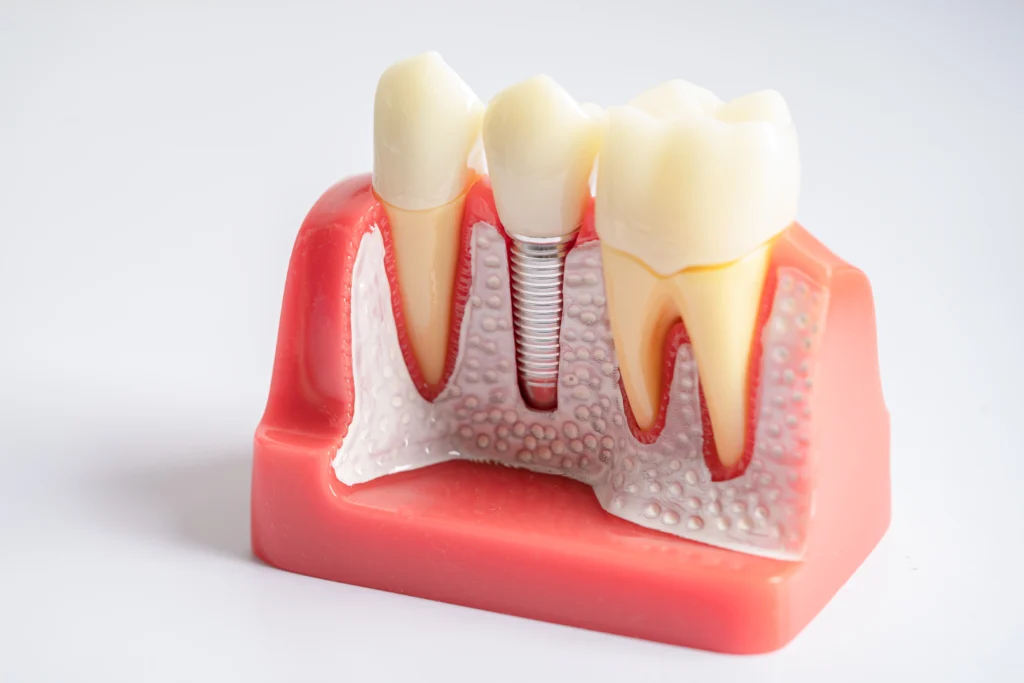
Dental implant healing stages
Getting an implant is great, but how long do dental implants take to heal? It varies from person to person depending on their health and and their particular case, but the dental implant recovery time usually lasts for at least a 2-3 months.
Immediate post-surgery
Within the first 24 hours after the procedure, it’s crucial you rest and take it easy. There may be some swelling after the dental implant is placed, and discomfort in the jaw, but this is very normal in the immediate post-surgery stage. It’s best to consume only soft foods and drink through straws. Patients should avoid high-intensity activities or eating anything too hard or chewy.
Soft tissue healing
During the soft-tissue healing phase, which lasts around 2 weeks, you may notice some tenderness or redness around the implant area. However, don’t worry because this is just the soft tissue around the implant working to accept the new material in your jawbone. It’s natural and healthy. To speed up the process, it’s best to rest as much as you can and stay hydrated to flush out any potential bacteria. A rinse with antibacterial mouthwash can also help cleanse the irritated implant area.
Bone healing
Over 3-6 months, the implant will fuse with existing bone in your jaw, in a process called osseointegration. During osseointegration, the titanium implant gradually bonds with the surrounding bone tissue, creating a stable and secure foundation for the replacement tooth. This ensures the implant is strong enough to handle regular chewing forces without movement or failure. Over this period, you can progressively return to your normal activities and diet, but it’s important to be mindful of good oral hygiene to avoid soreness or irritation.
During these three stages of tooth extraction healing, it’s recommended to book consistent appointments with your dentist to check progress. If you feel any intense pain or discomfort, be sure to take any prescribed pain medications as directed.

What can affect the tooth extraction and implant timeline?
Dental implants need time to bond to your jaw, so it’s important the area they’re inserted into stays clean. If not, a variety of issues could arise. To avoid delays in the healing process, consider the following tips:
- Be gentle when brushing — don’t apply too much pressure
- Refrain from touching the treated area
- Avoid smoking, as it can hinder healing
- Use ice to reduce swelling
- Skip gum and hard candy to prevent pressure on the implant site
- Avoid hot or spicy foods that may irritate the area
- Keep up with brushing surrounding teeth and using mouthwash
- Limit physical activity
- Avoid spitting
If you find it difficult to follow any of these tips, talk to your dentist about other ways to support your recovery.
How long do dental implants last?
Once an implant has fused to your jawbone, and if you look after it, it should last for a lifetime! The dental crowns that are attached to the implant will unfortunately need to be replaced every 5 to 15 years due to natural wear, but this is a simple process, non invasive and not painful, saving you money and time.
Dental implant aftercare made easy
Use this recovery period to prioritise yourself. Healing well takes time, so try not to overdo it with strenuous activities or foods that could disrupt the process. The best tips are to get plenty of rest, regularly clean your mouth, apply ice and see your dentist!
At Oakleigh Dental, we want all our patients to have a happy and healthy experience. We are here to support you through your oral health journey, every step of the way. If you have any questions or concerns about the dental implant procedure or recovery, feel free to reach out to us here — we’d love to help.