
What are dental crowns?
A natural tooth structure includes two main parts: the root and the crown. The root is the part of the tooth below the gumline that is hidden in a healthy mouth. The crown is the upper part that is visible above the gumline. Unfortunately, when you suffer a damaged tooth, you may need to replace your natural crown with a dental crown.
A dental crown is a prosthetic covering for an existing tooth that makes it stronger after decay or damage. Each dental crown fits in place to reflect your natural teeth as much as possible.

Signs you need a crown
If you’re experiencing regular tooth pain, discomfort when chewing or biting, sensitive teeth, and even gum disease or swelling, these may be indicators that something is wrong with your teeth. Depending on the cause behind it, you may need a dental crown.
Cracked, fractured or broken teeth
Despite enamel being the strongest substance in the human body, teeth can still break or fracture in different circumstances. Cracks and breaks occur with biting and chewing forces, getting hit in the mouth, or simply with age.
Cracks may also come from teeth grinding, which leads to significant damage. If you grind your teeth, speak with your dentist about potential solutions.
Large filling
Filling material fills a hole or cavity in your tooth to support its structure and prevent more erosion. Fillings are a common treatment when minor tooth decay has occurred but are not ideal for treating more significant damage.
Where a lot of filling material has been used or would be required, a crown provides more protection. Large fillings may also cause a tooth to crack. Using a crown would instead ensure you maintain the shape and strength of your teeth.
Previous root canal treatment
Dentists use root canal treatment when there is significant decay in the innermost tooth area, known as the pulp. In root canal therapy, a dentist drills into the tooth to remove the infected pulp. Unfortunately, this process often weakens the structure of the tooth.
A weak tooth is more susceptible to fracturing, but turning this into a crowned tooth can add stability. This avoids the need for tooth extraction in future, and in turn the placement of a dental implant.
Advanced cavity
Minor cavities are treated with fillings, but an advanced cavity will likely not be sufficiently treated by a filling. A dental crown procedure is more likely to protect the tooth long-term and avoid decay or infection.
Discolouration
Stained teeth — often caused by smoking, over-consumption of substances like coffee or wine, or even poor oral care — can make you feel anxious and self-conscious. Sometimes you can be born with discolouration caused by antibiotics or other factors that affect the teeth whilst in development. Dental crowns can improve the appearance of your teeth and give you back some confidence.
If discolouration is your main reason behind a crown, you may prefer something like porcelain veneers or teeth whitening. These cosmetic treatments are specifically geared to improve the appearance of your teeth. If your tooth is also misshapen or decayed, a dental crown procedure may be preferable overall.

Types of dental crowns
All dental crowns provide the same structure and support to your teeth. However, there are many different crown materials, each coming with different positives and drawbacks.
Gold crowns
Gold is a very traditional crown type but has become less popular as other metals have emerged that provide a better appearance. However, gold is still a highly durable material that provides both strength and longevity. They may suit areas that are less visible in the mouth.
Porcelain crowns
A porcelain crown — a type of ceramic crown — is typically the best crown option to match the natural appearance of your teeth. They are a great option for highly visible areas like the front teeth.
Porcelain crowns are unfortunately not always the strongest, particularly when compared to titanium or other metal crowns. They suit front teeth but may not be beneficial for teeth further back, where chewing and biting forces are stronger.
Titanium crowns
Titanium provides the most durable and decay-resistant crown material, but they are also the most expensive. They are ideal for teeth that play a large role in chewing or biting as they very rarely chip or break and do not wear down easily over time.
Similar to gold crowns, titanium does not reflect the appearance of natural teeth and is better suited to out-of-sight molars.
Hybrid crowns
Known commonly as porcelain fused to metal crowns (or PFMs), these hybrid dental crowns are made by using a metal or metal alloy core which then has a layer of porcelain bonded over the top. This combines the durability of all-metal crowns with the aesthetics of an all-porcelain crown.
Porcelain fused to metal crowns are a good option for both front and back teeth that require both improved durability and a good appearance. Unfortunately, the porcelain can wear down to expose the metal layer inside, but they should still last for several years.
Zirconia crowns
This is a material that has been developed in the last 10 years and that is most commonly used if you require both strength and an aesthetic result. Zirconium is a metal with similar chemical and physical properties to Titanium. However, it can also act as a ceramic, making it quite aesthetic and a good alternative for crowns that are visible.
Temporary crowns
Before your permanent crown arrives, we place a temporary crown to protect the natural tooth and avoid any complications with chewing or eating. Temporary tooth crowns are made of durable plastic resin. However, we always replace temporary crowns with permanent crowns as soon as possible.
Dental crowns procedure
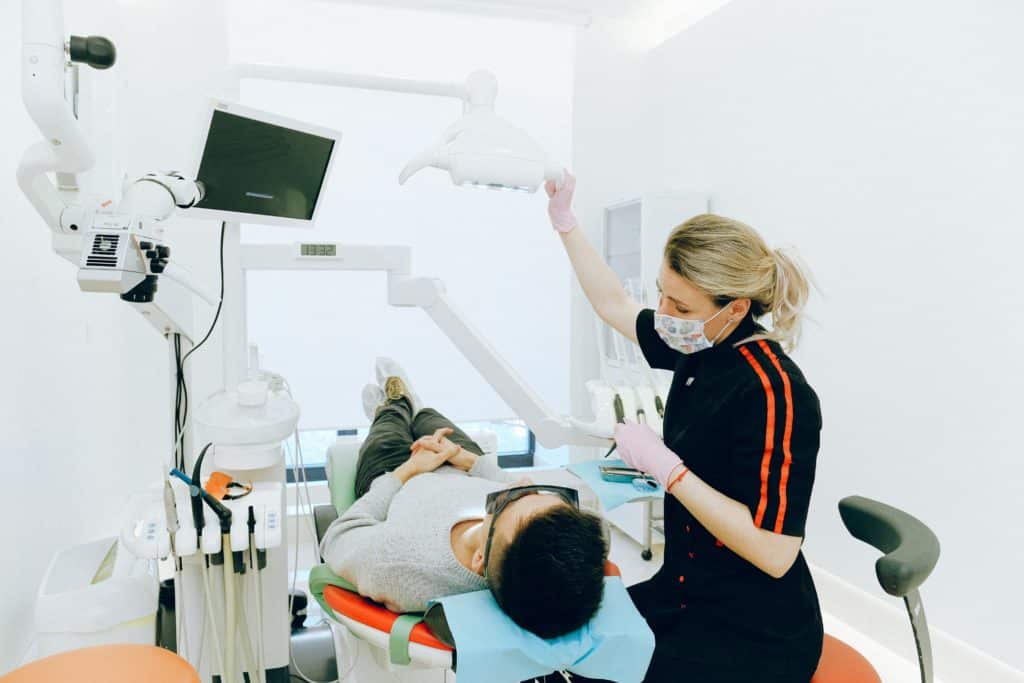
Having a dental crown placed may take some time and multiple appointments. It involves more than just placing it — we have to appropriately prepare your tooth, create the new permanent crown, and bond the crown to your tooth.
How is my tooth prepared for a dental crown?
To make sure you have a prepared tooth, the dentist starts by removing a layer of the tooth’s outer surface to reshape it to fit the replacement dental crown. From there, the dentist takes a mould of your tooth which is then sent away to tailor a crown.
Creating and placing dental crowns
We create each crown in a dental laboratory from a specific mould. You may have to wear a temporary crown while the permanent crown is being manufactured. When the crown comes in, the dentist bonds it to your reshaped tooth with special dental cement or adhesive.
Is it painful to have a crown put on your tooth?
Before any dental crowns are placed, your mouth will be numbed so you won’t be able to feel anything. Once the numbing wears off, the newly crowned tooth may feel slightly uncomfortable for a couple of days as you adjust. You may take over-the-counter pain relief to reduce this discomfort.
How long do dental crowns last?
The lifespan of your dental crown will depend on the type of crown that is placed and how well you take care of it over time. On average, you can expect dental crowns to last for between 5 and 15 years. Metal crowns (including gold and titanium) last for the longest amount of time and very rarely break. Porcelain crowns are more susceptible to chips or cracks.
Teeth located in the back of the mouth play a more significant role in chewing and eating, and as such are more likely to lead to a chipped or damaged crown. If the tooth receiving a dental crown is too weak, it may not be able to support a crown for as long as other teeth.
How to look after your dental crown
Proper care can ensure your crown lasts for several years. This includes keeping up a positive oral care routine, including brushing at least twice a day, flossing regularly and avoiding overly sugary foods.
Harmful habits that should be avoided include teeth grinding, which a dentist can help with, and chewing on hard objects.
If your dental crown feels loose, or you have a chipped crown, book an appointment to visit your dentist and have it looked at. They can help diagnose what may be going wrong, and how to fix the issue going forwards.
Benefits of getting dental crowns
Dental crowns play an important role in keeping your mouth healthy and avoiding extensive treatments like extraction. When considering your options, these are some of the primary benefits of getting a dental crown placed.
Simple procedure and relatively quick recovery
While it can take a couple of weeks for dental crowns to be manufactured, on the whole, it is a simple and painless procedure from moulding and tooth preparation through to bonding. Once the dental crown is bonded, it is typically only a few days before you adjust to your new crown.
Restoration and durability
Dental crowns are the best protection for a decayed tooth or one with damage. They provide a restored chewing surface at the back of the mouth or an improved appearance closer to the front. Additionally, dental crowns provide the most durable solution compared to fillings or onlays, lasting for a decade or more if cared for properly.
Confidence

Dental crowns can provide peace of mind and assurance, not only in terms of how your smile looks but also confidence in your oral health. Having a dental crown placed can help you feel more sure of your teeth, while also reducing pain, sensitivity and discomfort.
Dental crowns at Oakleigh
If you’re suffering from a damaged or decayed tooth and in need of a solution, book a consultation with our expert team and we can help you understand if a crown would be right for you. Treating problem teeth as early as possible will save you future time and money while also preventing pain and anxiety.
Our team can help you find the right treatment for you. We’re always here to help you smile.