Dreaming of a perfectly aligned smile? Braces can make it a reality, correcting gapped, crowded, and crooked teeth, as well as overbites and underbites, but only if you look after your teeth while you have them on. Learning how to brush your teeth with braces can be a bit of an adjustment because of the brackets and wires but once you have the technique down, it’s easy to keep it up and get your pearly whites to shine.
The importance of regular teeth cleaning
If brushing doesn’t happen, leftover food in your mouth will cause bacteria to build up on your teeth, forming plaque and tartar. This build up will eat away at your enamel, cause swollen gums and stink up your breath. You’ll then start to see discolouration and experience tooth decay which will create holes in your teeth. If left untreated for a long enough time, the bacteria will damage your tooth all the way to its centre. This is not what you want, so let’s learn how to brush properly to avoid this.
How to brush teeth with braces
With patience and good technique, you can keep all of your teeth clean and healthy. Here are our five key tips to try when brushing with braces:
- Hold your toothbrush at a 45 degree-angle at the gumline and brush in a circular motion on each tooth, working your way around your mouth.
- Brush each bracket one by one and clean under your archwires by tilting your toothbrush to get in between your braces.
- Brush the molars of each of your teeth to clean out the food.
- Brush the inside surfaces of your teeth.
- Rinse with water or mouthwash to provide moisture to oral tissues and help with bad breath.
Use fluoride toothpaste and a soft-bristled toothbrush to effectively clean your teeth. A light amount of pressure is recommended because it’s more effective than heavy pressure. Patients can also consider getting a braces toothbrush, specifically designed to clean in and around orthodontic appliances.
Flossing with braces
Flossing twice a day, or after every meal, is great for your gum health and helps to reach areas of your mouth that brushing might miss.
To floss with braces, pull out a long piece of floss, wrap it around your pointer finger, thread the extra floss under your wire , between the brackets on your teeth and then wrap the second end of it on your other finger. Gently floss the teeth in a back and forward motion. Repeat this process on every tooth. It is also possible to buy specially made braces floss (sometimes called bridge floss) which come in pre-sectioned pieces with a stiffened end that makes it easier to thread under the wires and between your teeth.
It is not uncommon to feel your gums hurt after flossing if they’re not used to it. If they start to bleed that means it’s been too long since you last flossed and you need to start doing it daily again. The pain should go away within a week or two of consistent flossing.
String flossing vs water flossing
If flossing with a string isn’t for you, you can use a water flosser instead. A water flosser sprays a thin, pressurised stream of water in between your teeth to remove plaque and debris. For those with braces, water flossers are gentler and more convenient than traditional string floss. They are more effective at removing bacteria from the small spaces by the teeth under the gum line that sometimes the string can miss.
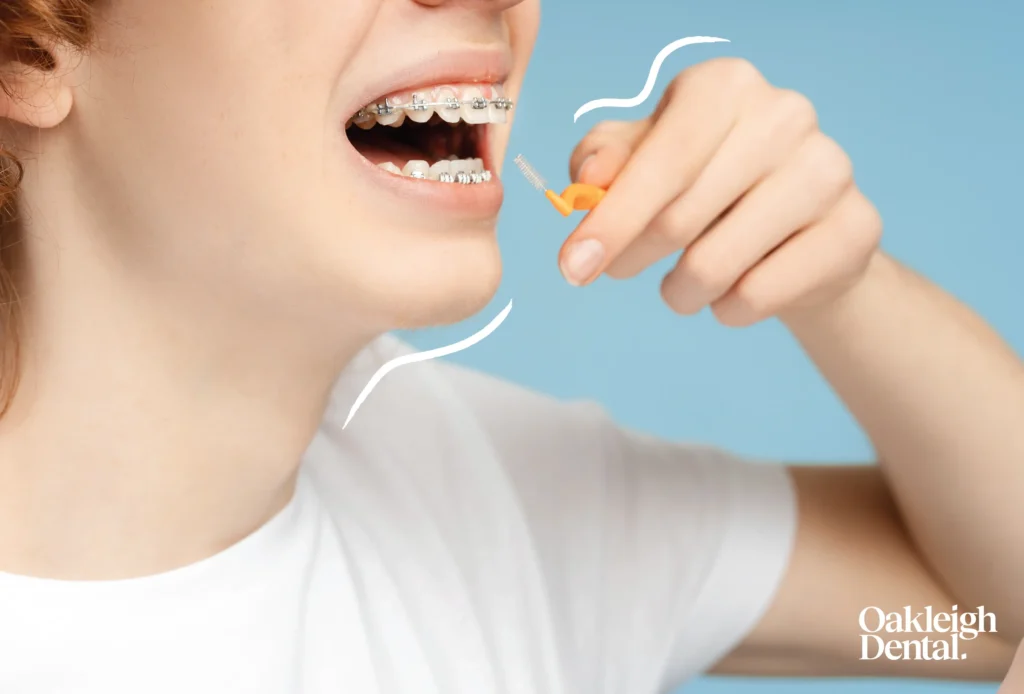
Using an interdental brush like a Pikster can also be much easier to use to clean underneath the wires and around the brackets.
Brush, floss, rinse
Once done flossing, rinse your mouth out for at least 30 seconds with an antibacterial mouthwash to wash away all the debris and bacteria. Mouthwash has added benefits of reducing gum inflammation, freshening your breath, and helping to reduce cavities. Make sure not to swallow any mouthwash.
Cleaning your tongue with a scraper is another way to maintain good oral health. Tongue scraping eliminates even more bacteria from your mouth that might have been missed. You can clean your tongue by placing the rounded edge of your scraper onto the back of your tongue and pulling it towards the tip. You can then use a cloth or tissue to clean off any debris the scraper picked up. It may take a few scrapes.
Teeth cleaning with braces
Neglecting your oral hygiene can lead to permanent white scarring on your teeth and gum disease — outcomes you definitely want to avoid.
At Oakleigh Dental, we prioritise your oral health, giving you all of the tips you need to keep your teeth in the best health. If you have any questions about how to brush with braces or any orthodontics, feel free to reach out to us or book an appointment and we’ll be happy to help you smile.