No one likes living with pain in their mouth or toothache, and no one should have to! Modern dentistry has a lot of effective techniques to deal with teeth issues, including root canals. If hearing that fills you with a sense of dread, it’s time to learn more about the procedure and why there’s nothing to fear. In fact, it could be incredibly beneficial for you!

What is a root canal?
The innermost layer of a tooth is the pulp, a mass of connective tissue that sits underneath the dentin. The root canal is the structure connecting the root ends of the tooth to the pulp chamber in its centre. Unfortunately, pulp can become inflamed or infected in cases of tooth decay. In these situations, we often need to remove the damaged pulp.
Dentists remove pulp through a root canal treatment, where an opening is made in the crown for access. Root canals might sound complex, but they are very common in modern dentistry and can prevent serious complications.
Signs you need a root canal
A tooth becoming infected is the most common precursor to needing a root canal. Unfortunately, it isn’t always possible to tell that you have an infected tooth, as it can develop without any symptoms. Without any signs, your regular six-monthly dental check up has a lot of importance. At these visits, a dentist is able to evaluate your oral health and order x-rays to see the infection. Without a regular visit, your teeth may decay without you realising, even to a point where they are beyond repair.
There are some symptoms that can indicate an infected tooth that requires attention though. Common root canal signs and symptoms to look out for include:
- Ongoing tooth pain and discomfort, including severe toothache.
- Darkening and discolouration of the tooth.
- Sensitivity to heat and cold that lingers.
- A swollen jaw or gums.
The visible state of the tooth can also be a strong indicator. Chipped and cracked teeth can have damage to nerves, which inflames the inner areas and can make root canal necessary.
Root canal stages
Before the dentist begins the root canal treatment process, they use x-rays to identify where infection and inflammation exist. This tells them where pulp needs to be removed. The dentist uses the images to plan the best way to access the inner area of the tooth.
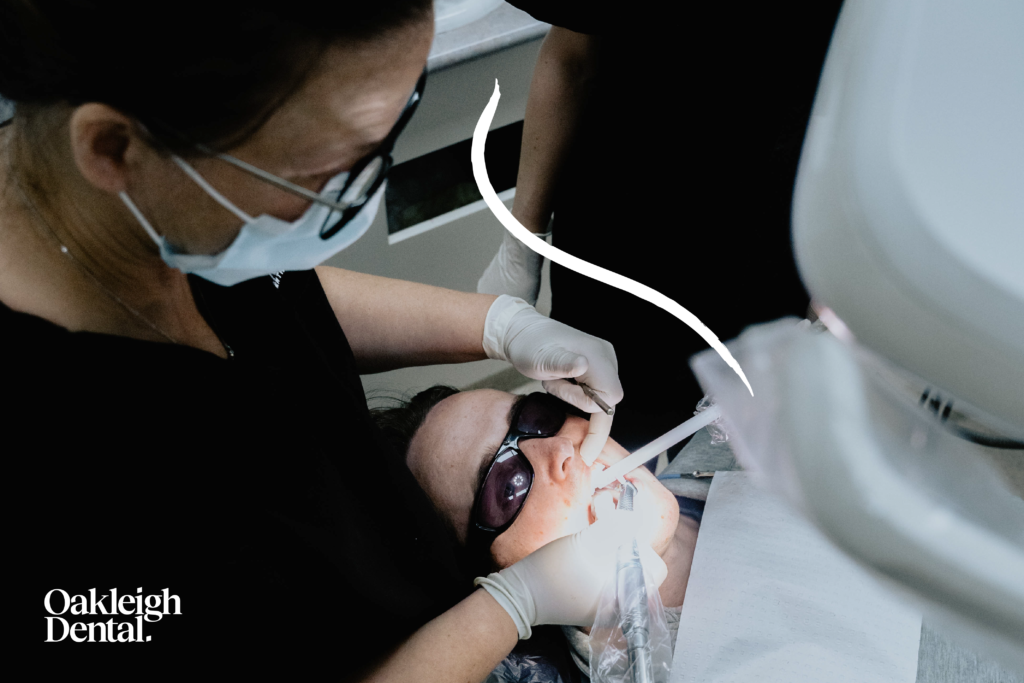
For the root canal process itself, the dentist numbs the area around the affected tooth using local anaesthetic and then creates a small opening in the crown of the tooth. The hole allows for small instruments to remove pulp from the main pulp chamber and each root canal. Once the pulp is gone, the dentist throughly cleans and disinfects the inside of the tooth and the canals.
From there, filling-like material is used to fill the root canals and seal from the bottom. A dental filling or crown seals the top of the tooth and completes the restoration. We typically favour crowns for teeth towards the back of the mouth that are generally larger, as they require a more extensive restoration, while front teeth often need just a filling.
How long does a root canal take?
Each root canal procedure depends on the position of the tooth being treated and the level of decay. Removing pulp and cleaning the inner area of the tooth will typically take between 30 and 90 minutes. However, patients should expect to come to the dentist for multiple appointments, including a pre-treatment consultation to assess oral health and plan the most effective course, as well as a later restoration appointment to finalise the tooth with a crown or permanent filling.
Does a root canal hurt?
Root canals have carried a stigma of being painful, overly invasive procedures for a long time, but modern root canal procedures are much more comfortable. Given that inflamed or infected pulp is often the cause of significant tooth pain and discomfort, its removal typically leads to immediate relief for patients. Similarly, while the procedure is underway, the area is under local anaesthetic and patients are not able to feel any pain.
It is normal to experience some sensitivity and discomfort after the procedure is complete and once the anaesthetic has completely worn off. Patients can manage this using over-the-counter pain relief medication and it should fade relatively quickly.

Root canal aftercare
It may take a few days for your mouth to feel completely normal following a root canal procedure. There are a number of important things to keep in mind in the period after your procedure, including:
- Bleeding: Bleeding is common for a little while after the treatment, but applying pressure with a moistened gauze pad over the area will help to reduce the bleeding and encourage the healing process.
- Chewing: Patients should avoid chewing in the area where the procedure took place at least for a few days, as it will be very tender and likely sore. All chewing should be kept as gentle as possible.
- Diet: Keeping up a soft diet for at least the first few days will ensure the healing process goes as smoothly as possible. Patients should also avoid any foods that are overly hot as this can aggravate the soreness.
- Cleaning: While it is important to be careful and gentle, patients should go back to brushing and flossing immediately to keep their oral health in ideal condition.
While these tips will help to promote the correct healing process, the focus for anyone who has not yet had a root canal should be to prevent it becoming necessary. Maintaining a daily dental health routine, including brushing at least twice a day and flossing at least once, will help you avoid it. Patients should also commit to their regular dental checkups and cleans. These behaviours will help to prevent a root canal.
Fixing the root of the problem
Root canals are an effective way to fix infected and inflamed teeth, while remaining comfortable for patients with straightforward aftercare. At Oakleigh Dental, we complete all of our procedures with care and a focus on our patients. Learn more about how we treat Cracked Teeth and book your appointment with us — we can’t wait to help you smile.