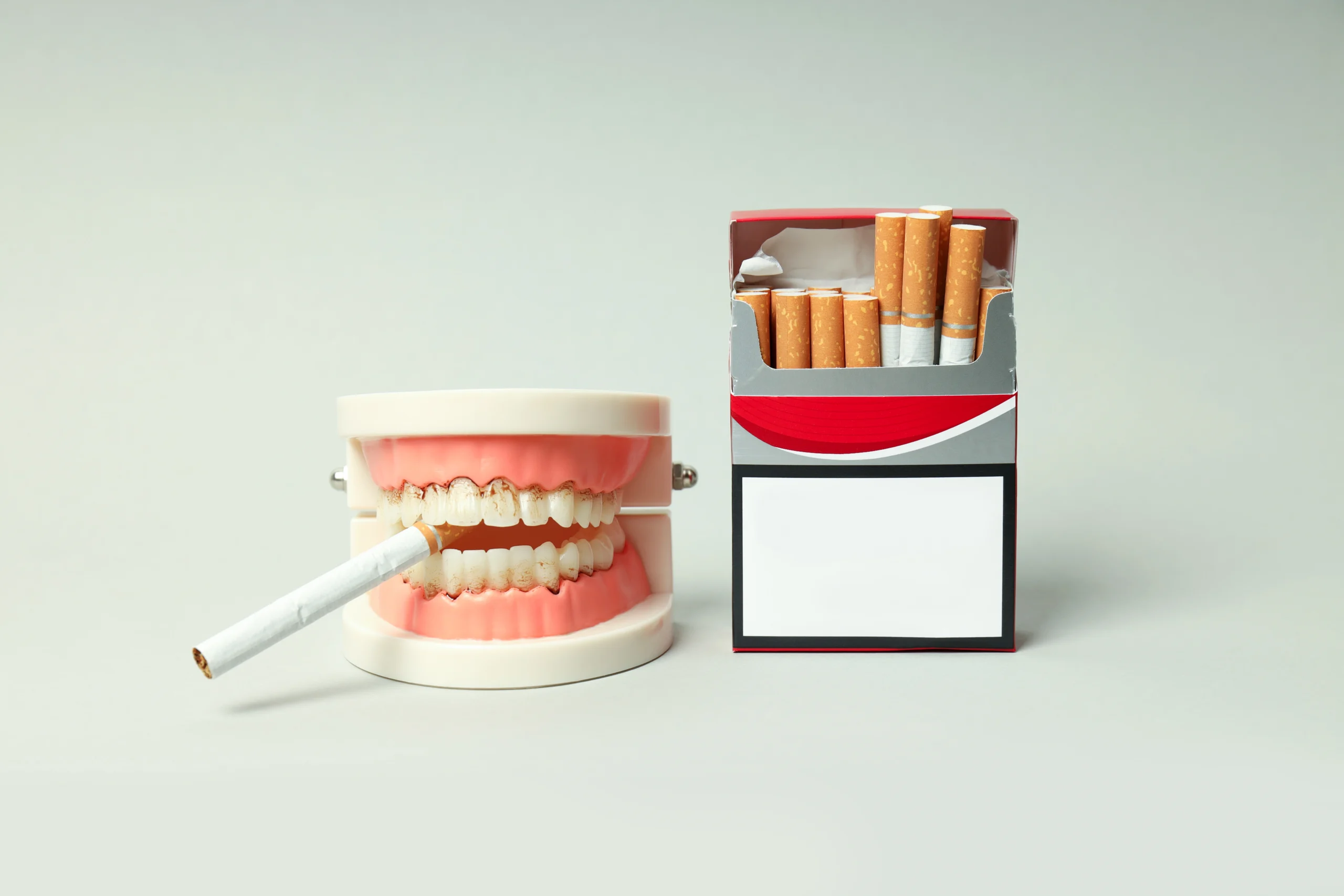
When meeting someone for the first time, their smile is often one of the first things you notice. It’s no surprise there’s a big demand for bright, white teeth, with how noticeable teeth can be. However, smoking cigarettes—a habit that’s persisted for over a century—can cause immense damage to your oral health that even the best toothbrush can’t undo.
While smoking has declined since its peak in the 1960s, unfortunately, it remains a challenge for many young Australians. In 2022, 10.6% of Australians aged 18 and over smoked daily, and 10.2% of those aged 15 and over also picked up the habit. We all know smoking harms your lungs, but have you ever stopped to think about what it does to your teeth? The news isn’t good. It causes bad breath, discoloured teeth and many other health issues.
What are the most common oral problems smokers have?
Since the cigarette is placed right in your mouth, smokers face a variety of dental issues.
Gum disease and tooth loss
Many wonder, if smoking causes gum disease? Unfortunately, yes. Tobacco left on your teeth after a smoke causes a sticky film of bacteria to build up, known as plaque. If it’s not removed, it will cause a hardened tartar to stick which in turn irritates your gums and leads to gum disease. If it’s not treated, teeth can become loose and fall out which is not what you want to experience.
Some symptoms to be aware of would be:
- Gums starting to pull away from teeth
- White pus coming from gums
- Extremely bad breath
- Red, swollen, tender, bleeding gums

Mouth cancer
Smoking causes cancer. If the cells lining your mouth (lips, tongue, floor of the mouth, gums, cheeks) start to get damaged from the tobacco, they grow uncontrollably to form a tumour. If diagnosed early on, it can be treated, but if it’s not dealt with, it will only continue to worsen. Tobacco and alcohol cause over 75% of mouth cancers.
Some symptoms to be aware of would be:
- Intense swelling
- Red or white patches in your mouth
- Ulcers on your lips for 10 days
Smoker’s palate
When you smoke frequently, you will experience white lesions, also known as patches, on the inside of your mouth. These thickened patches come onto your cheeks and mouth and cannot be scraped off. For most people, cutting out smoking is the only way to clear the condition, if not, surgery needs to be involved.
Poor healing after tooth removal
Let’s say you got a tooth removed but you smoke right after. Not a good combination because smoking increases the risk of poor healing and dry socket. This is because it reduces blood flow to the gums and interferes with the formation of the protective blood clot. It introduces harmful toxins like nicotine that delay tissue repair. The suction from smoking can dislodge the clot, exposing the underlying bone and nerves too. As a whole, the increased bacterial load in the mouth heightens the risk of infection. So it’s highly recommended not to smoke when you undergo a tooth removal.
Tooth decay
Similar to before, the tobacco left on your teeth can also cause tooth decay, which is commonly known as cavities. The bacteria in your mouth mixes with tobacco residue to create plaque, which often gets trapped between your gums. Over time, this buildup not only stains and discolours your teeth but also leads to the formation of cavities filled with harmful gunk. If they aren’t taken care of, they can cause immense pain and potential tooth loss.
Bad breath
Everyone knows you just went out for a smoke when you come back. This is because your smokers breath is so strong when you talk to others as tobacco leaves a pungent, lingering odour in the mouth, lungs, and even skin. The chemicals in cigarettes dry out the mouth and reduce saliva flow, which normally helps wash away bacteria. This creates an environment where bacteria thrive, leading to bad breath.
Decreased sense of taste
When you smoke often, you will notice over time that tobacco damages taste buds and affects their sensitivity. So overtime, smokers may not fully taste flavors as much because they instead have a persistent bad taste in their mouth.

Preventing dental issues as a smoker
People who smoke frequently are more likely to get infections and that’s because they don’t heal as well as non-smokers. Therefore, it is very important for people who smoke to visit their dentist frequently to keep their teeth and gums healthy and check for signs of any of the oral problems above.
If you’re a frequent smoker, quitting is one of the best ways to improve your oral health. However, if quitting feels overwhelming, taking small steps can make a big difference. Start by gradually reducing the number of cigarettes you smoke each day, which can help ease the transition and lower the impact on your teeth and gums over time.
Outside of that, all the main prevention techniques are recommended:
- Floss in between all teeth and brush with fluoride toothpaste twice a day.
- Have your 6 month check up regularly planned in advance.
- Limit alcohol.
Connect with professionals who can help
At Oakleigh Dental, we’re committed to helping you achieve your best smile. No matter your background or where you are in your journey, we’re here to support you every step of the way. Whether you’re a smoker or working on quitting, our team is ready to provide the care and guidance you need for a healthier, brighter smile.
Learn more about us or book an appointment here.