Imagine this: it’s a typical morning. You’re standing in front of the mirror after brushing your teeth, reaching for the floss. As you glide the floss between your teeth, you notice a hint of blood in your mouth. Concerned, you take a closer look and realise the bleeding is coming from your gums. Don’t panic—you’ll be okay. But this could be a sign of gum disease.
What is gum disease?
Put simply, gum disease is an infection of your gums. It is where the soft tissue around your teeth becomes damaged and inflamed. People going through gum disease tend to see receding gums and experience bone loss below their teeth. While some people may be naturally more prone to gum disease, it often develops due to poor oral hygiene—like neglecting to brush twice a day or skipping flossing altogether.
Gum disease is known clinically as periodontitis or periodontal disease. If you let it go untreated, it weakens the bone that supports your tooth, causing your tooth to loosen and fall out. This is known as tooth loss. Do you think you may be experiencing a stage of it yourself? No need to worry, we’ve got you covered. Let’s look at the symptoms of what you may see.
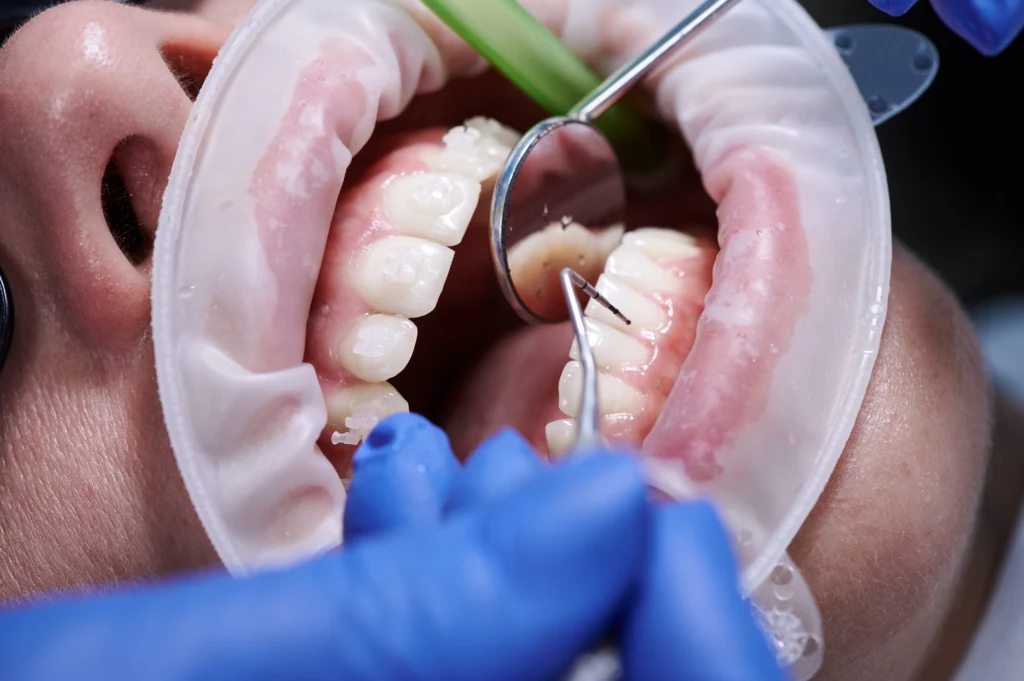
The warning signs of gum disease
In general, healthy gums are light to dark pink and firm around your teeth. There shouldn’t be any bleeding or pain when you floss. But if there is, and plaque is beginning to build up, there’s a high chance that gum disease is happening in the background without you realising it.
Let’s look at the warning signs you may see:
Gingivitis is the earliest stage of gum disease and this is where you may experience:
- Swollen or puffy gums.
- Bright red, dark red or dark purple gums.
- Gums that feel tender and sore when touched.
- Gums that bleed easily especially when flossing or spitting out blood when brushing or flossing your teeth.
- Pain when chewing food.
Mild periodontitis is the second stage. This is where bacteria, the #1 source of the disease, gets under your gums and starts to deteriorate the supporting bone. You may notice:
- A change in the way your teeth fit together.
- New spaces, such as black triangles, in between your teeth.
- Gums that pull away from your teeth, beginning your receding gum stage.
After that, the third stage is moderate periodontitis which is where bacteria begins to erode your tissues and bone. From this, you may experience:
- Bad breath (known clinically as halitosis) as well as an unpleasant taste that won’t go away.
- Infections causing pus and your tooth loosening up.
The final stage is advanced periodontitis, where the tooth is lost entirely. While replacement options exist, losing a natural tooth is never a pleasant experience. Many wonder, can gum disease be reversed? While yes it can be, you won’t want to wait. If you notice any of these symptoms, take them as a warning sign of potential tooth loss and make it a priority to improve your oral hygiene as soon as you can.

Take care of your oral health
Brushing and flossing twice a day, along with scheduling regular checkups every six months, are essential to preventing the warning signs of gum disease and protecting your natural teeth. Neglecting your oral hygiene allows plaque to build up, which can eventually lead to gum disease. If you’re noticing symptoms like infections, pus, or loose teeth, don’t wait—early intervention is crucial for maintaining your oral health.
At Oakleigh Dental, our team is here to provide expert care and personalised treatment to keep your smile healthy and strong. Book your appointment today and take the first step toward better oral health.