While we all do our best to look after our teeth, they can unfortunately suffer from different issues, varying from minor staining through to cracks and deep fissures. Restoration becomes a top priority in these situations, with a variety of dental treatments out there that can do that. Two of the most popular are veneers and crowns, but which would be the best course? Let’s examine veneers vs crowns.
Veneers
Dental veneers are a type of cosmetic treatment where thin layers of material are applied to the front of teeth. Veneers — often described as ‘shells’ — are typically made from durable materials that are also aesthetically consistent with natural enamel, including porcelain and composite resin. These shells bond securely to the front of teeth with a special dental adhesive. Veneers cover gaps, chips and discolouration, providing a visual enhancement and confidence boost.
How do veneers work?
Veneers are a purely cosmetic dental treatment, attaching over the front of existing teeth to improve to their appearance. However, veneers do not actually help to treat or fix the issues underneath. In some cases, a dentist will need to treat these issues before veneers can be placed. Veneers can only be attached if existing teeth and gums are in good enough condition.
Veneers are crafted to custom-fit your teeth, using a mould or impression of your mouth. When they have been fabricated, a small amount of your natural enamel is typically shaved away to provide a better surface for the dental adhesive which will bond the veneers to your teeth securely. As such, getting veneers is an irreversible treatment, and the shells cannot be removed once applied.

Benefits of veneers
Veneers provide an immediate boost to the look of teeth while also maintaining functionality and not impacting negatively on their health. Some of the primary advantages of veneers include:
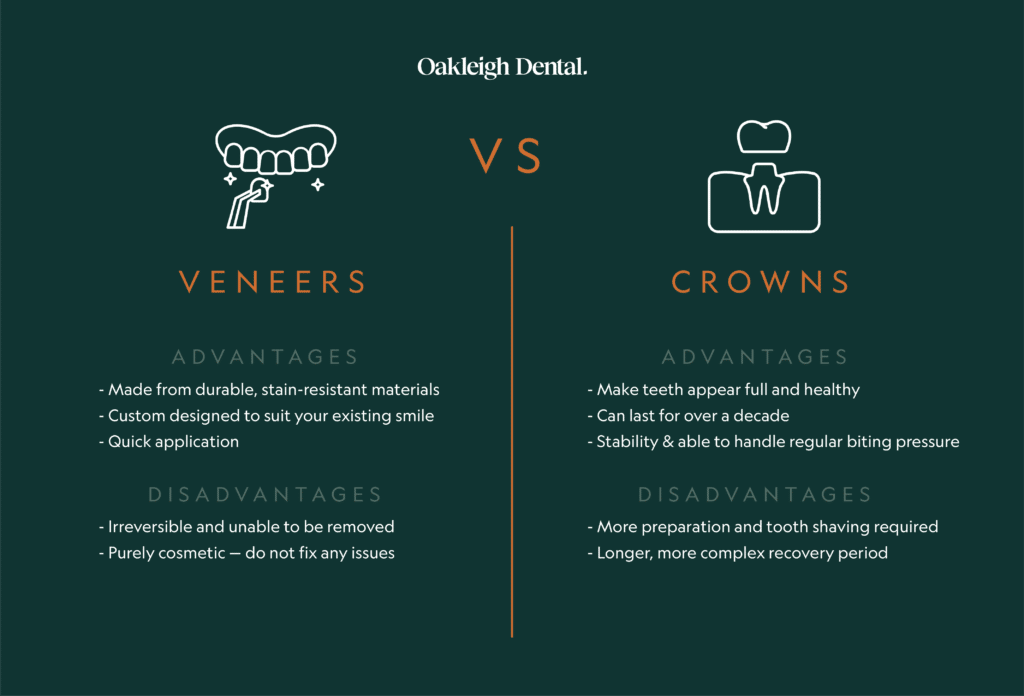
- Durability: Veneers are made from durable materials like porcelain and ceramics, helping them to last when they are looked after.
- Aesthetics: Dental veneers are custom-designed to suit your smile and fit seamlessly on your teeth, all while improving their colour.
- Stain Resistance: The materials used in veneers are highly resistant to staining, helping them keep their brightness for years.
- Quick Treatment: Getting veneers is a quicker dental process, with patients typically able to have them applied in few appointments.
Disadvantages
While offering a host of benefits, there are still important considerations before beginning treatment. Primarily, veneers are an irreversible treatment, due to the removal of tooth enamel and the permanence of the dental adhesive. Patients aren’t able to remove the veneers after a period of time.
Additionally, veneers will not help to improve your oral and teeth health, but only serve to conceal any issues underneath. If you suffer from serious tooth decay or gum disease, these will need to be treated first.
How much do veneers cost?
Veneers are typically purchased on a per-tooth basis, but the price varies depending on the number you get and the material used. Composite veneers can cost between $500 and $1000, while porcelain veneers may cost between $1500 and $2000 per tooth. Some dentists will offer packages that reduce the per-tooth veneers cost if you receive multiple veneers.

Crowns
A crown is a dental prosthetic that fits over a damaged tooth to create a ‘cap’, protecting the natural tooth enamel and structure. Porcelain and ceramic crowns are used to treat teeth that are heavily damaged or decayed, restoring their health and providing renewed stability.
How do crowns work?
Crowns are made from a variety of durable materials including porcelain, zirconia and gold. Dentists will typically prioritise materials that closely resemble tooth enamel. A dental crown encases the top portion of a damaged or decayed tooth to recreate its original appearance and restore full function. The stability of the crown then helps to ensure the longevity of the tooth.
The dental crown procedure involves the dentist shaving some of the outer layer of your tooth to create an appropriate surface. They then take an impression of your tooth which is sent away to make a tailored dental crown. When the crown is fabricated, it will be bonded to the reshaped tooth using special dental cement.
Benefits of crowns
Crowns are a more extensive treatment than veneers, combining cosmetic changes with general dental health improvements. Particular benefits include:
- Restoration: The materials used for crowns provide important stability and support to teeth that are damaged and decayed.
- Durability: With good care, crowns are designed to last for up to 15 years without breaking or decaying. Metal crowns last the longest.
- Appearance: Crowns ensure teeth appear full and your smile is complete, while also improving their appearance.
Disadvantages
While both treatments require some of your tooth structure to be removed, having a crown placed requires significantly more. This makes the tooth preparation process more invasive and lengthy. Recovery from treatment also takes longer as there is a more complex healing period after a crown is placed, as well as dietary changes for a period of time.
Crowns can also feel uncomfortable for a bit of time after the procedure and be sensitive to hot and cold temperatures. This should fade with time, but can make the immediate period frustrating.
How much do crowns cost?
Similar to veneers, the cost of a crown depends on the material used and the amount of prep work required. An average dental crown cost will be around $2000, but because patients do not often receive more than one crown at a time, dentists do not offer bulk discounts. Additionally, patients will typically need to wear a temporary crown before their final crown is manufactured, which can add more costs.

Veneers vs crowns — which option is best for restoring your teeth?
How you choose to restore your teeth will depend on your individual needs and the extent that your teeth need help. Veneers are purely cosmetic while dental crowns are a fuller dental treatment designed to support overall tooth health. If your tooth has become severely decayed or damaged, getting a crown is preferable as this will support it where a veneer will only cover the issue. We recommend crowns when you need a full restoration and not just a cosmetic change.
If your problems are more to do with the appearance of your teeth and not their overall health, veneers may be the better option as they can adequately deal with gaps, stains and crookedness. Your dentist will take every aspect of your oral and dental health into account to help you make an informed decision about the right treatment for you.
Transform your smile at Oakleigh
Whether you need a cosmetic enhancement or a more thorough dental restoration, our dedicated and experienced team can help you. Contact us to help you understand the different options available and which ones are right for you, and we’ll start helping you smile.